
Check the payment route before you deposit
 Available in US
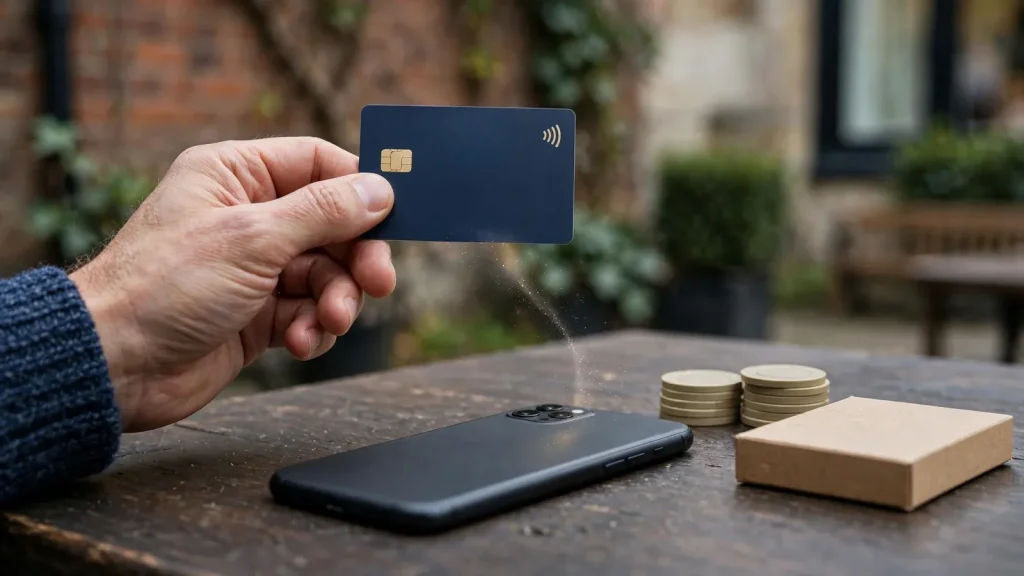
Debit card payments link a casino account to funds held in a bank or other eligible account, with issuer approval required for each transaction.
How Debit Card Payments Work at Online Casinos
A debit card connects a casino account to a bank account or another eligible account that holds your money. When you use it to fund an online casino account, the card is the payment route: it asks the card issuer to authorise a transfer of funds. It does not create a separate balance of borrowed money in the way a credit card does.
The casino account and your bank account remain distinct. Money held in the casino account is available for gambling under the casino’s account rules; money in your bank account is controlled through your bank. A card transaction moves funds between these parts of the payment chain. It does not turn the casino into your bank or make the debit card itself a gambling account.
What happens during a card payment
You select the card option in the cashier and enter or choose the card details requested by the site. The payment request then passes through the casino’s payment processing arrangements to the card network and the issuing bank. The issuer checks whether the transaction can be authorised. If it approves the request, the payment can proceed; if it declines it, the casino does not receive an approved payment through that attempt.
When choosing a UK casino that accepts debit cards, check both whether your card can be used and how long payouts may take. The details available here cover payout speed only, so verify debit card availability before signing up.
-
Dieselwin
- Payout speed
- 1-3 business days
Dieselwin lists a payout speed of 1–3 business days. Check directly whether it accepts your debit card.
-
SpinFormula
- Payout speed
- 1-3 business days
SpinFormula lists a payout speed of 1–3 business days. Check directly whether it accepts your debit card.
-
EvoSpin
- Payout speed
- 1-3 business days
EvoSpin lists a payout speed of 1–3 business days. Check directly whether it accepts your debit card.
-
Amunbet
- Payout speed
- 1-3 business days
Amunbet lists a payout speed of 1–3 business days. Check directly whether it accepts your debit card.
-
WinBeast
- Payout speed
- 1-3 business days
WinBeast lists a payout speed of 1–3 business days. Check directly whether it accepts your debit card.
-
NightLuck
- Payout speed
- 1-3 business days
NightLuck lists a payout speed of 1–3 business days. Check directly whether it accepts your debit card.
-
Zombillion
- Payout speed
- 1-3 business days
Zombillion lists a payout speed of 1–3 business days. Check directly whether it accepts your debit card.
-
NightWin
- Payout speed
- 1-3 business days
NightWin lists a payout speed of 1–3 business days. Check directly whether it accepts your debit card.
-
Jetsetspins
- Payout speed
- 1-3 business days
Jetsetspins lists a payout speed of 1–3 business days. Check directly whether it accepts your debit card.
-
BeOnBet
- Payout speed
- 1-3 business days
BeOnBet lists a payout speed of 1–3 business days. Check directly whether it accepts your debit card.
Approval is not simply a check that the card number is valid. The issuer may also consider the account’s available funds and whether the transaction can be processed under its controls. The casino’s cashier then reflects the result of the payment request. A card transaction can therefore fail even when the card is active: the issuer may not approve that particular payment, or the details supplied may not match what is required.
This is the basic mechanism behind a debit card online casino payment. The card gives the casino a way to request funds from an account you can spend from; it does not guarantee that every request will be accepted. The precise steps displayed in the cashier can differ between sites and card providers, but the roles remain distinct: the casino initiates the request, the payment network carries it, and the issuer decides whether to authorise it.
Debit cards and credit cards are not interchangeable
With a debit card, the payment draws on money available in the linked account. A credit card instead gives access to borrowing, with the cardholder owing the issuer for amounts charged. The cards can look similar and use a similar checkout process, but their funding sources differ. That difference matters for gambling payments in the United Kingdom.

The regulator banned credit-card gambling on 14 April 2020, and the restriction has not been relaxed. UK-licensed casinos cannot accept credit-card payments for gambling. The restriction also covers credit-card funds routed through a money service business and wallet payments where the wallet allows credit-card funds to be used for gambling. A credit card is therefore not an alternative to a debit card for funding a UK-licensed casino account.
A debit card may carry a familiar card-network logo, but the logo alone does not tell you whether the product is debit or credit. The relevant distinction is the underlying type of card and funding source. If you are unsure which type you hold, check with the card issuer rather than inferring it from the card’s appearance or from the payment screen.
The card funds the account, not each game action
Once a card payment has been approved and credited, the funds sit in the casino account. The card is not normally presented again for each bet or game action. In that sense, the payment has two stages: first, a card transaction moves money into the account; later, the casino account balance is used within the site.
This separation helps explain why a card payment and gambling activity are not the same transaction. The card issuer handles the payment request, while the casino records the funds in your account. If a card request is declined, that does not mean the casino balance has been funded. If the payment succeeds, it does not mean the card is being charged anew whenever you use the account.
UK casinos commonly accept debit cards, including Visa and Mastercard, but the presence of a familiar brand does not mean every card product will work at every cashier. The payment mechanism is broadly the same; the exact eligibility and options depend on the site and card. Treat the card as a way to move funds into the account, not as a guarantee of acceptance or a source of credit.
What to Compare When Assessing a Debit Card Casino
A useful comparison is not just whether a casino displays a debit-card logo. Consider how clearly it explains the payment route, whether the same named account can be used consistently, and what charges could apply along the way. These details help you assess a debit card casino site without relying on a headline claim that a payment method is accepted.
Is the payment route clear?
Check whether the casino identifies the card route it supports and explains how to select it in the cashier. A general statement that cards are accepted may not tell you whether your particular card product will work; that needs to be confirmed at the point of payment. Treat the listed method as a starting point for checking, not as a guarantee that every card will be eligible.

The clearest arrangement is often to use one payment account, in your own name, consistently for deposits and withdrawals. If the casino’s payment instructions distinguish between card schemes or account types, read those conditions before using the cashier. A route that is described precisely is easier to assess than one referred to only as “card payment”.
Consistency matters because casinos may apply closed-loop rules: funds are expected to move back through the payment source used to fund the account. A named route that you can use for both directions can therefore be simpler to manage than switching between unrelated accounts. This is a comparison point, not a promise that every card transaction will be handled identically. The casino’s own rules determine which routes it accepts for each function.
Can you follow the money?
Before choosing a debit card casino, map the parties involved in a transaction. The casino may set its own charges; the payment provider may have separate fees; your card issuer or bank may apply charges; and currency conversion can affect the amount credited or returned. A card transaction may also involve network costs. The relevant question is not simply whether the casino advertises a fee, but what the full route costs for your transaction.
A specialist payment review identifies these as possible sources of payment costs. That does not mean every charge applies to every card or casino. Check the casino’s payment terms and, where relevant, the provider’s and bank’s terms. If the displayed amount and the amount debited from your account differ, identify which party’s conversion or fee rules account for the difference.
Do
- Use one payment account in your own name consistently
- Map all possible fees from the casino, provider, and bank
- Compare exchange rates for currency conversion
Don't
- Assume a "free" label covers all parties in the payment route
- Rely on a general logo as a guarantee of card eligibility
- Mistake a no-fee route for the lowest-cost option
Currency conversion deserves particular attention. A specialist payment review also notes that the exchange-rate spread can outweigh a visible flat charge. A route with no stated fixed fee is therefore not automatically the lower-cost choice. Compare the rate used for conversion as well as any fee shown separately. If the account and card use different currencies, the conversion terms can affect the total cost even when the casino’s own fee is clear.
Does the information let you compare like with like?
When comparing debit card casinos, use the same questions for each site. Is the card route named clearly? Can the same named account be used consistently? Are charges explained by the casino, provider and bank, and is currency conversion addressed? If an answer is unclear, you cannot reliably compare the route with another one.
Do not treat the word “free” as a complete cost description unless the terms explain what it covers. It may refer only to a charge made by the casino, while another party’s fees or the exchange rate remain relevant. Conversely, the existence of a possible provider or bank fee does not establish that you will incur it. Check the terms for the specific route and your account.
A debit card casino list can be useful as a shortlist, but a list alone cannot settle these points. Payment terms can differ between sites, and the details that matter are attached to the route you would actually use. Read the cashier information and linked terms rather than assuming that a familiar card brand means identical conditions everywhere.

A practical comparison
For each casino you are considering, note the named card route and whether the casino explains its use across deposits and withdrawals. Then record any stated casino charge, provider fee, bank or issuer fee, conversion spread and network cost. Mark unclear items as unconfirmed rather than assuming they are zero. This gives you a more dependable comparison than choosing on the basis of card acceptance alone.
The aim is not to find a universally best debit card casino site. It is to identify a route whose terms you can understand and whose costs you can check before using it. When the payment route, account ownership and possible charges are all clear, you can make a like-for-like comparison without mistaking a simple-looking checkout for a complete account of the transaction.
Making a Deposit: Limits, Currency and Payment Routes
Before you fund a casino account, check three things in the cashier: the minimum the selected route will accept, the maximum the operator will allow, and the currency in which the account is held. These settings can differ between payment methods, so a limit shown for a debit card may not apply to a bank transfer or another option.
A specialist casino review places the minimum deposit offered by some sites in the £10–£20 range, with the exact starting amount depending on the method selected. Treat that as a guide to what you may encounter, not as a standard that every casino follows. The cashier should show the minimum for the route you choose before you confirm the payment. If your planned deposit falls below it, the transaction may be rejected even if your card itself is working.
The maximum also needs checking at the point of deposit. A specialist review of casino payment terms notes that caps can apply per transaction, per day or per month, and may vary with the method and account status. A large payment might therefore be refused even when the card has enough available funds. If the cashier presents a limit, distinguish the casino’s cap from any spending or transaction restriction set by your bank.
Check the account currency first
A specialist review of casino payment pages reports GBP as a supported account currency, but that does not establish that every account is denominated in pounds. Confirm the currency displayed in your account before making the first payment. If the account is held in another currency, a deposit funded from a sterling bank account may be converted, and the credited balance may differ from the amount debited.
Currency is an account setting, not just a display preference. Check the currency shown before you submit the deposit and read the payment confirmation for the amount that will be charged. If the casino gives you a choice of account currency during registration or in cashier settings, make sure you understand which one will apply to later transactions as well.
Compare available deposit routes
A debit card may be one available route, but the cashier can also offer alternatives. Open banking and bank transfers are described by a specialist payment-method review as providing instant deposits at many sites; availability and handling depend on the individual casino and the route it offers. Follow the instructions shown at checkout, since a bank payment can involve a different confirmation process from entering card details.

Some UKGC-licensed casinos accept Apple Pay for deposits. Paysafecard is a prepaid voucher and is deposit-only, so it should not be treated as a way to fund a withdrawal. A specialist review of payment options also reports Skrill among the methods found at UK-friendly casino sites. The options shown to you may depend on the site, your account and the cashier’s current configuration; do not assume that a method available elsewhere will appear on your account.
When comparing routes, look at the amount the cashier will credit, not only the amount you intend to send. Check that the selected option is permitted for your account, that its minimum and maximum suit the payment, and that the confirmation screen reflects the intended currency and sum. If an option is absent or the cashier rejects a payment, do not repeatedly submit the same transaction; check the displayed instructions or contact the operator through its support channel.
A successful deposit should appear in the casino balance before you begin using it. If the bank shows a debit but the balance has not updated, retain the transaction details and check the account history before trying again. A second attempt could create another payment rather than resolve the first one. The cashier’s status and the casino’s transaction record help distinguish a pending payment from a failed one.
Successful Deposit
-
1
Check Limits and Currency
Verify the minimum and maximum deposit limits in the cashier and confirm the account currency.
-
2
Select Route
Choose the debit card option and enter the required details.
-
3
Confirm Balance
Wait for the funds to appear in the casino balance before starting to play.
Operators must verify a customer’s age before allowing a deposit into a gambling account. Complete any requested account steps before attempting to fund it; otherwise, the deposit process may not proceed. Once you have confirmed the currency, route and limits, the cashier provides the practical check that the intended deposit can be made under the conditions attached to your account.
Checking Whether a Casino Accepts Your Debit Card
A payment logo on a casino’s general information page is not enough to establish that your particular debit card can be used. A specialist casino review may list Visa and Mastercard among the available methods, but current UK availability and eligibility for individual card products need to be checked in the casino’s cashier. Treat the cashier as the practical check for your account, rather than assuming that a brand name guarantees acceptance.
Start by signing in and opening the cashier or deposit area. Look for the card option shown there, then follow the on-screen steps far enough to see whether your card details can be entered and the payment method is offered for your account. The options displayed can depend on the casino’s current arrangements and on whether your card product is eligible. A general payment-method page may describe what the site supports in principle; the cashier shows what is available to you at that point.

If the card brand appears but a transaction is declined, that does not necessarily mean the casino accepts every card carrying that brand. Card-product eligibility can differ, so a general logo is not a substitute for checking the specific option presented by the cashier. Nor does a successful payment elsewhere establish that the same card will work at another casino: acceptance is determined by the site’s available route and the card’s eligibility for it.
Check that the cashier identifies the method as a debit-card payment before proceeding. If the label is unclear, consult the casino’s payment information or ask its customer support to confirm whether your card type is accepted in the UK. Do not infer acceptance from a method being listed on a review page, from a card brand being widely used, or from another player’s experience. Those sources cannot confirm the current options attached to your own account.
This check is about whether you can use the card to make a deposit. It does not, by itself, establish that the same route can be used for withdrawals; payment functions may differ and should be confirmed separately. Once you have found a supported option, read the cashier’s displayed instructions before submitting a transaction. If the option is absent or your card is not eligible, use only another method that the casino itself presents as available to you.
For a casino serving customers in Great Britain, also distinguish a current, account-specific payment option from a broad claim that a site accepts cards. Remote gambling licensees selling into the British market must hold the relevant Gambling Commission licence. Checking the cashier answers the narrower payment question: whether the card route is currently offered to you. It does not replace checking the operator’s regulatory status before depositing.
Debit Card Withdrawals: Routing and Processing Time
A debit card deposit and a casino payout are separate transactions, so the time taken to fund an account does not predict how quickly money will come back. A card payment may be authorised promptly when you deposit, while a withdrawal has to pass through the casino’s checks and be sent back through an eligible payment route. A specialist review describes card deposits arriving instantly while withdrawals can take several business days; treat that as an example of how the two stages can differ, not a timetable that applies to every casino or card.
The route is also shaped by anti-money laundering controls. UK rules commonly require a casino to return funds to the source used to pay in. This is known as a closed-loop approach: if you deposited with a debit card, a payout may be directed back to that card rather than sent to a different account on request. The method shown in the cashier may describe where the casino sends the funds, but the card issuer’s processing is a separate part of the journey.
A withdrawal therefore has more than one stage. First, the casino receives and reviews your request. It may need to confirm that the account is eligible for payment and that the required verification is complete before approving it. Once approved, the casino sends the payment through its payment processor. The remaining time depends on the receiving payment route and the handling of the transaction after it leaves the casino. A “processed” or “sent” status may mean the casino has completed its part; it does not necessarily mean the funds are already available in your bank account.

The first debit card casino withdrawal can take longer if the operator still needs to complete KYC. A specialist review notes that initial withdrawals may involve verification, which can extend processing compared with a later request on an already checked account. If documents or account details are requested, the payment may not move to the next stage until the review is resolved. Check the casino’s withdrawal status and any message in your account before assuming the delay is with your bank.
If the cashier offers a different payout route, switching to it is not automatically a shortcut. Returning money to the original source is a common anti-fraud and anti-money-laundering control; an alternative route may require extra checks before the casino can approve the transfer. The route may also have to be supported for withdrawals, not just deposits.
When estimating a casino withdrawal to a debit card, separate the casino’s approval time from the time after approval. Read the cashier’s stated processing information, check whether your account verification is complete, and confirm which source the casino will use for the payout. That gives you a clearer picture of where a delay may occur without assuming that a fast deposit means an equally fast withdrawal.
Withdrawal Processing Stages
- Casino Review: The operator checks account eligibility and verification status.
- Approval: The casino approves the request and sends it to the payment processor.
- Routing: The funds are sent back through the eligible route (often via closed-loop rules).
- Final Processing: The card issuer processes the transaction into your bank account.
Keeping Debit Card Transactions Secure
A debit card transaction is easier to reconcile when the casino account and the card are in the same customer’s name. If those details do not match, the operator may need to establish who owns the funds and whether the payment is authorised. Using your own account information and payment route helps avoid friction caused by a basic ownership mismatch; it does not remove the operator’s responsibility to check transactions.
Before depositing, check that the name and other account details you have provided are accurate and consistent with the details held by your bank. Do not use another person’s card, even with their permission. A payment that appears to come from someone other than the casino account holder can raise questions about ownership and may delay or prevent the transaction from being completed.
These checks are part of how a remote gambling licensee manages payment risk. The casino may also need to verify your account through KYC. If requested, provide the information through the operator’s official account process, rather than sending sensitive details in response to an unexpected message. Be cautious of anyone asking for card security details or account passwords outside that process.
A payout may not follow the same route as a deposit. Closed-loop rules and anti-fraud controls can mean that funds must be returned to the original payment source. If that route cannot be used and the operator offers an alternative, expect it to check the change: a different destination can require additional verification before the transaction is approved. This is a control on where funds go, not evidence that the alternative route is unsafe.

Account verification also affects how the operator handles a transaction. A specialist review notes that payout speed can depend on both internal approval and whether the customer’s account has been fully verified. The practical security point is to respond to legitimate verification requests through the casino’s account area and keep your account information current. If the details are incomplete or inconsistent, the operator may need to resolve that before completing a payment.
When a transaction is declined or held for review, use the casino’s official support channel to ask which information needs attention. Avoid making repeated attempts with different cards or payment routes before you understand the issue; changing the source can introduce a new ownership check rather than resolve the existing one. Keep records of the transaction and any messages in your account so you can explain the sequence clearly.
For a debit card casino UK account, the straightforward approach is to use a payment method in your own name, enter accurate account details, and follow verification requests through official channels. These steps reduce avoidable ownership questions while leaving the operator able to apply its payment and fraud controls.
Payment Costs and Account-Level Limits
A debit card is not automatically the cheapest way to fund a casino account. The total cost depends on the particular transaction and on which parties charge for it. A specialist payment review identifies several possible sources: a casino charge, a payment-provider fee, a bank or card-issuer fee, a currency-conversion spread and, where relevant, a network cost. A route with no visible flat charge can still cost more if its exchange rate is less favourable.
Compare the amount that would leave your bank account with the amount credited to your casino balance. Check whether the account is held in pounds sterling and whether the payment would be converted. If the casino displays a charge, consider it alongside any fee shown by your provider or bank; looking at only one line can hide the transaction’s full cost.
Deposit caps are separate from fees. A specialist casino-payment review notes that the maximum may be set per transaction, per day or per month, and can differ according to the payment method and account status. The limit shown for a card may therefore not match the limit available through another route, or the amount permitted on your account. Check the cashier and account terms before relying on a particular cap.
UK Gambling Commission rules also require remote gambling operators to prompt new customers to set a financial limit before their first deposit. They must provide accessible controls for managing account-level limits. These controls let you restrict how much you can deposit over a chosen period; they are not the same as a payment-method cap imposed by the casino or provider.
Before making a payment, distinguish the two kinds of limit: a transaction ceiling determines whether that particular deposit can be processed, while an account-level financial limit is a control you set for your own gambling activity. If a deposit is declined, either may be relevant. Check the displayed reason and the applicable limit rather than assuming that changing payment method will resolve it.

Using a Debit Card While Playing Online Slots
A debit card funds your casino account; it is not used to pay for each slot spin. Once a deposit has been credited, the game deducts stakes from the account balance. The card’s role ends at the funding stage, so a slot does not need to support a particular card brand. The relevant question is whether the casino account has funds available for play.
This distinction matters when you see references to slots with debit card payments. The phrase describes how money can reach an account at a casino offering slots, not a separate way to place bets inside a game. If a deposit has not appeared in the balance, you cannot use it for a spin; if it has, the slot uses the balance under its own game rules.
In Great Britain, online slots have specific play restrictions. A spin must last at least 2.5 seconds, and autoplay is not permitted. These rules apply to the slot experience, regardless of whether you funded the account by debit card or another supported route.
There is also a maximum stake per game cycle. For players aged 18 to 24, the cap is £2. For players aged 25 and over, it is £5; the higher cap took effect on 9 April 2025. These are stake limits, not deposit limits: the amount you put into the casino account does not change the maximum permitted stake for a slot cycle.
So, when comparing debit card casino sites in the UK, separate two questions: can the account be funded by your card, and what rules govern play once the money is there? Payment availability does not remove the slot restrictions.
Checking Payment-Method Compatibility in the Cashier
A payment method shown on a casino site does not automatically provide a complete route for both adding and withdrawing funds. The cashier may list an option for deposits while offering a different set of methods for payouts. Check each function separately before treating a method as suitable for your account.
This distinction matters because some options are explicitly deposit-only. Paysafecard, for instance, is a prepaid voucher for deposits, not a route for receiving withdrawals. Some UKGC-licensed casinos also accept Apple Pay for deposits; its presence in the deposit menu does not by itself establish that it can be used for withdrawals.
To check compatibility, open the cashier while signed in and inspect its deposit and withdrawal choices. Read any conditions attached to the method, including whether availability depends on your account or the transaction. A general payment-method logo or a page describing accepted deposits is not enough to confirm payout support.
For casino sites with debit card payments, the same principle applies: confirm that the cashier supports the functions you need rather than assuming every listed option works both ways. Availability can differ between sites, so a method offered at one casino may not appear at another. The cashier is the practical place to verify what your account can use.
If an option is deposit-only, decide before paying how you would receive any later withdrawal. Do not assume that a different payout method will be available or accepted automatically; the operator may set conditions for alternatives. This check is relevant whether you are considering a standard casino or a live casino, since the payment route belongs to the account and cashier, not to an individual game category. For UK play, assess the options at a UKGC-licensed site and rely on the functions the cashier actually displays.
Visa Debit Cards: Acceptance and Credit-Card Restrictions
A Visa debit card is a commonly accepted way to fund a casino account in the UK, but the Visa logo alone does not confirm that a particular card will work at a particular site. The cashier is the practical check: it shows the payment options available to you there. Acceptance can depend on the casino and the card product, so do not assume that a card used elsewhere will be accepted in the same way.
The key distinction is whether the card draws on money in a current account or provides access to borrowed credit. UK-licensed casinos may accept eligible debit cards, but they cannot accept credit-card payments for gambling. The restriction took effect on 14 April 2020 and remains in force. It applies to the payment’s funding source, not just to the label shown on a payment screen.
Routing a credit card through another service does not make it an acceptable gambling payment. Remote gambling operators must also refuse wallet payments where the wallet permits credit-card funds to be used for gambling. A debit card and a credit card can look similar, but the source of funds changes whether the transaction is allowed.
Before paying, check that the card is identified as debit and that the cashier offers it for the transaction you intend to make. If the payment is declined, do not try to disguise a credit-funded payment by switching routes. Use an eligible method instead, and follow the casino’s displayed instructions. These checks help distinguish a Visa debit card casino payment from credit-card gambling; the brand name by itself does not establish eligibility.
What is the fastest withdrawal method for UK casinos?
PayPal, open banking services and debit cards linked to fast payout systems are generally among the quickest options. Your casino’s approval process and whether your account is fully verified also affect how quickly you receive the money.
Are Visa and Mastercard deposits definitely debit cards?
No. The Visa or Mastercard logo alone does not show whether a card is debit or credit; check the card type with your issuer and confirm that it is accepted in the casino’s cashier.
What is the current minimum deposit?
Minimum deposits commonly start at £10–£20, depending on the payment method.
Which method has the lowest fees?
There is no universally cheapest method. Compare casino and provider charges, any bank or issuer fees, currency-conversion spread and network costs for the amount you plan to deposit or withdraw.
Is Skrill available?
Yes, Skrill is available at some UK-friendly casino sites and remains a common deposit option. Some casinos exclude it from promotions.
Why must withdrawals return to the deposit method?
Returning funds to the original payment source is a common anti-fraud and anti-money-laundering control. Using another route may lead to additional verification.
Do UK casino withdrawals require verification?
Verification can affect withdrawals, particularly a first payout, which may take longer while checks are completed. Keeping your account and payment details in your own name can help avoid basic ownership-related delays.
Are fast casino withdrawals guaranteed?
No. Withdrawal speed depends on the casino’s internal approval process and whether your account is fully verified.
Payments at UK Casinos: Methods Compared
Content created by the «myessayhelper» team