
Understand the bonus before you buy in
 Available in US

A practical guide to bonus entry, volatility, demo limits and how slot outcomes are formed.
How a Bonus Buy Feature Changes a Slot Round
A bonus buy gives you a way to enter a slot’s bonus feature directly, rather than waiting for the feature to become available through ordinary play. It changes how you reach that part of the game; it does not turn the reels, symbols or paylines into something else. The distinction matters because a slot round still has an underlying structure, even when you choose a shortcut to its bonus.
In a standard round, you place a stake and the reels produce an outcome. Symbols land in positions on the reels, and the game evaluates those positions according to its rules. A payline is one of the patterns the game checks for a winning combination. The reels and paylines define how ordinary outcomes are formed; a bonus feature is an additional mode with its own rules or sequence.
A five-reel slot helps show why these parts should not be confused. A stake can apply across all five reels. That does not mean each reel is a separate game, nor that the bonus feature changes the number of reels. The reels remain the layout used to generate the slot’s outcomes. The paylines determine which arrangements count under the game’s rules. A bonus buy is an option relating to access to the bonus, not a replacement for that layout.
The bonus itself may work differently from the ordinary reel round. It could involve a separate sequence of play or a different way of presenting outcomes, depending on the game. What matters for understanding the feature is that the bonus has its own entry point and rules, while the base game continues to be organised around its reels and win conditions. The exact design is specific to the slot, so the feature’s description is the place to establish what happens after entry.
When a buy option is available, selecting it means choosing the bonus route instead of relying on ordinary play to reach that feature. This is why “bonus buy” describes a method of access, not a type of reel or a promise about the result. Entering a bonus does not, by itself, specify what symbols will appear or what the round will return. It only changes which part of the game you are entering.
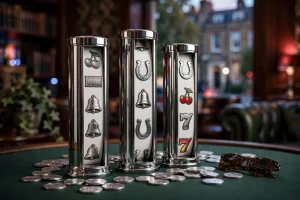
It also helps to separate the stake for a regular round from the idea of a bonus entry. The game’s interface and rules explain the choices it offers, including whether a bonus can be entered directly. Do not assume that the ordinary stake is simply applied to each reel as a separate charge: in a five-reel slot, one bet can cover all five reels. The reels participate in producing the game outcome, while the bonus-buy option concerns access to a feature.
This distinction is useful when comparing slots with a bonus buy feature. First identify the ordinary game structure: how its reels are arranged and how its paylines are evaluated. Then look at the bonus description to see what the feature is and how the game provides access to it. A slot can have a recognisable reel-and-payline game whether or not it offers a buyable bonus. If it does offer one, that option adds another route into the feature; it does not erase the mechanics that govern the rest of the slot.
What to Check Before Using a UK Bonus Buy Casino
Before using an online casino that offers bonus-buy slots, check whether the business holds the relevant UK Gambling Commission operating licence. The feature inside a slot does not change the legal status of the site offering it: the operator’s authorisation is the starting point for assessing whether the casino is permitted to serve customers in Great Britain.
The Commission oversees gambling in the United Kingdom, including online casinos. For remote gambling aimed at consumers in Great Britain, its authority applies even when the operator’s key equipment is located elsewhere. That means a casino cannot avoid the requirement simply by hosting its systems outside the country. In Great Britain, the Commission is the only regulator responsible for commercial gambling.
Check the operator, not just the game
A slot’s provider and the casino offering it are different businesses with different roles. A game provider creates or supplies the software; the casino operator makes the game available to customers and handles the gambling account. Seeing a familiar provider’s game on a site does not establish that the site itself is authorised. Check the business responsible for the casino service.
Use the UK Gambling Commission’s public register to verify the operator’s licence number before depositing. Make sure the registered business identity corresponds to the casino you intend to use. If the site gives a company name or licence number that does not match the register, treat that mismatch as a reason to pause rather than assuming that a game catalogue or polished presentation proves legitimacy.
A brand name and a registered business name may not be identical, so compare the details the casino publishes with the register rather than relying on a quick name search. The important point is to establish a clear link between the website and the licensed business responsible for providing the gambling service. If you cannot make that connection, you have not completed the check.
Understand what the licence covers
The Commission issues operating licences to businesses, while personal licences apply to individuals who perform relevant roles in gambling operations. For choosing a casino, the business operating licence is the central check: it concerns the company offering gambling to customers. A personal licence is not a substitute for the operator’s authorisation.
A site may describe itself as licensed, regulated or established, but those words are not a verification. Use the register to check the licence information independently. Do not infer that one licensed service automatically covers every site or brand associated with a business; confirm that the casino you are considering is connected to the licensed operator shown in the register.

This matters for a bonus-buy casino just as it does for any other online casino. A slot feature changes how a round can be entered, but it does not confer permission to offer gambling. The relevant question is who is providing the real-money casino service and whether that business has the required authorisation for the British market.
Keep the jurisdiction clear
The Commission’s remote-gambling remit for Great Britain is not determined by the location of a server or other key equipment. A business serving consumers there must meet the applicable licensing requirement even if its technical infrastructure is elsewhere. So, when assessing an online casino, do not treat an overseas address as proof that British rules are irrelevant.
The United Kingdom and Great Britain are not interchangeable in every legal context. The Commission regulates commercial gambling in Great Britain, while the legal framework is not identical across every part of the UK. For a casino aimed at customers in Great Britain, the practical licensing check is whether the business has the relevant Gambling Commission operating licence.
A careful check therefore has a defined purpose: identify the operator behind the casino, compare its details with the public register, and confirm the operating licence rather than relying on claims about the slot or its provider. This does not rank casinos or establish that a particular bonus-buy game is available; it verifies the regulatory status of the business offering the gambling service.
Do
- Use the UK Gambling Commission’s public register
- Verify the operator’s licence number
- Match the registered business identity to the casino
Don't
- Rely on a quick name search for brand names
- Assume a polished presentation proves legitimacy
- Use a personal licence as a substitute for operator authorisation
How Volatility Changes Bonus Buy Sessions
Volatility describes the pattern of a slot’s returns, not whether a particular spin or bonus round will win. A lower-volatility game tends to return value through smaller wins appearing more frequently. A higher-volatility game tends to produce wins less often, with larger amounts when they do occur. Neither pattern tells you what the next result will be.
That distinction matters when you use a bonus buy feature. It gives you access to a bonus round, but it does not make the round’s outcome certain. The feature can produce a return, a small return or no return that offsets what you staked. Its presence does not remove the uncertainty built into the game.
In a lower-volatility slot, the broader pattern is more frequent, smaller returns. A bonus round may still have a result that differs sharply from the surrounding spins; volatility describes the game’s overall distribution, not a promise that every part of it follows the same rhythm. If you choose to enter the feature directly, you should not assume that the round will behave like the ordinary play around it.
A higher-volatility slot has a different return pattern: winning results are less frequent, while some wins can be larger. This can make a session feel uneven, with stretches that return little or nothing and occasional larger results. Buying access to a bonus does not cancel those possible stretches or ensure that a larger result will arrive. A bonus round is still subject to the game’s uncertainty.

The practical difference is therefore about the shape of possible outcomes, not a reliable way to make a session profitable. If you prefer returns to be distributed in smaller amounts more often, lower volatility describes the closer fit. If you are considering a higher-volatility game, expect a less frequent pattern of wins and do not treat the possibility of a larger payout as an expected result. These are descriptions of tendencies across play, not predictions for an individual session.
A slot’s house edge also matters. Where a game has a positive house edge, its mathematical expectation is negative over sufficiently many sessions. That remains true whether losses build gradually through many small outcomes or appear unevenly alongside occasional larger wins. Volatility changes how results are distributed; it does not reverse that underlying expectation.
For anyone comparing bonus buy slots in the UK, keep the two ideas separate: volatility concerns the distribution of returns, while buying a bonus concerns access to a feature. Neither tells you what the next round will pay. A more frequent pattern of smaller wins is not a guarantee of recovering a stake, and the chance of a larger win is not a reason to assume that one will occur. Treat the feature as part of the game’s uncertain outcomes, rather than as a way to control them.
Trying Bonus Buy Slots in Demo Mode
If you’re looking for bonus buy slots in the UK in 2026, use this list as a starting point and check each operator’s current slot selection and terms before you play.
-
Dieselwin
- Payout speed
- 1-3 business days
Dieselwin lists a payout speed of 1–3 business days. Check its current bonus buy slot selection and terms to see whether it suits you.
-
SpinFormula
- Payout speed
- 1-3 business days
SpinFormula lists a payout speed of 1–3 business days. Check its current bonus buy slot selection and terms to see whether it suits you.
-
EvoSpin
- Payout speed
- 1-3 business days
EvoSpin lists a payout speed of 1–3 business days. Check its current bonus buy slot selection and terms to see whether it suits you.
-
Amunbet
- Payout speed
- 1-3 business days
Amunbet lists a payout speed of 1–3 business days. Check its current bonus buy slot selection and terms to see whether it suits you.
-
WinBeast
- Payout speed
- 1-3 business days
WinBeast lists a payout speed of 1–3 business days. Check its current bonus buy slot selection and terms to see whether it suits you.
-
NightLuck
- Payout speed
- 1-3 business days
NightLuck lists a payout speed of 1–3 business days. Check its current bonus buy slot selection and terms to see whether it suits you.
-
Zombillion
- Payout speed
- 1-3 business days
Zombillion lists a payout speed of 1–3 business days. Check its current bonus buy slot selection and terms to see whether it suits you.
-
NightWin
- Payout speed
- 1-3 business days
NightWin lists a payout speed of 1–3 business days. Check its current bonus buy slot selection and terms to see whether it suits you.
-
Jetsetspins
- Payout speed
- 1-3 business days
Jetsetspins lists a payout speed of 1–3 business days. Check its current bonus buy slot selection and terms to see whether it suits you.
-
BeOnBet
- Payout speed
- 1-3 business days
BeOnBet lists a payout speed of 1–3 business days. Check its current bonus buy slot selection and terms to see whether it suits you.
A demo lets you open a slot and inspect its interface without staking real money. Where the demo includes the bonus-buy control, you can use it to see how the game presents the feature and what happens on screen when it is selected. The credits displayed in this mode are simulated: they are not money, cannot be withdrawn, and do not produce payouts.
The first check is whether the particular demo actually exposes the feature. A slot may have a bonus buy in real-money play but omit it from its demonstration version, or the demo may provide access only to the standard spin. Look at the controls and the game’s information panel rather than assuming that a visible slot title guarantees a complete demonstration. If the buy option is absent or inactive, the demo cannot show you that part of the game.
When the option is available, treat the demo as a way to inspect the sequence, not as a source of financial results. You can observe how the game signals that the feature has been selected, how it moves into the bonus round, what symbols or multipliers appear, and how the game returns to its regular screen. This helps you understand the interface before deciding whether you want to play for real money. It does not establish what a later bonus round will show.
Pay attention to the information shown before activating the feature. The game may display a price or explain how the bonus round is entered; read those details in the game itself. In demo mode, any displayed cost is applied to the simulated balance, not charged to a payment method. If the screen is unclear about whether you are in practice mode or real-money play, stop and check the mode indicator before selecting a control. Similar-looking screens can behave differently because one uses fictional credits and the other uses funds you have deposited.
A useful inspection is deliberate rather than simply clicking through. First identify the ordinary spin control and the feature control, then note which balance changes when either is used. Watch for how the game labels the bonus and whether it shows the outcome as a separate round or as part of the same game screen. Read the paytable and help panel as well: those explain the symbols and game rules, while the animation alone may not make every outcome clear. You can take your time in a demo without treating each simulated result as a signal about what should happen next.
The surrounding slot design can also be easier to understand when you examine its information screens. For instance, some low-volatility games use five reels and at least twenty-five paylines, with fixed jackpot amounts and bonus rounds that apply multipliers to accumulated wins. These are design characteristics, not a promise that a demo will award a particular result or that every game with a bonus buy uses that structure. Check the rules for the game you have opened instead of inferring them from another slot.
Demo play and real-money play are separate environments. A simulated balance has no cash value, and a simulated win is not a payout. In real-money mode, the stake is actual money and results can affect the balance in your gambling account. Moving from one mode to the other changes the consequence of a spin; it does not turn a demo result into a forecast. A run of wins, losses or bonus outcomes in practice cannot tell you what will happen in a later session.
For that reason, there is no demo result that establishes which bonus-buy slot is best for you. The demo can help you judge whether the controls are understandable, whether the rules are visible and whether the bonus sequence makes sense to you. Those are practical observations about the game’s presentation. They are not evidence that a particular slot will return more, or that buying its bonus will lead to a favourable result.
- Confirm the buy control is present
- Check if terms and costs are readable
- Follow the transition into the feature
- Review the help panel for relevant rules
If you are comparing bonus-buy video slots in demo mode, use the same questions for each game: is the buy control present, are its terms readable, can you follow the transition into the feature, and does the help panel explain the relevant rules? Record what the interface shows, not what you hope a future result will be. That keeps practice useful for learning the game’s layout while keeping simulated credits distinct from real money.
Free Play and What It Can—and Cannot—Tell You
Free play is useful when you want to learn how a slot responds to your choices without putting real money at stake. You can identify the spin control, see where the game displays its balance and find the rules or feature information. If the slot offers a bonus buy, practice can also show where that option appears and what information the game presents before you select it.
A bonus round is easier to follow when you already recognise its symbols, prompts and controls. Free play lets you observe how the round begins, what actions are available and how the game returns to its main screen afterwards. This is useful for understanding the sequence of events, not for judging what a real-money session will return. The credits shown in free play are not cash, and any apparent wins cannot be withdrawn or paid out.
Practice can also help you decide whether the presentation is clear enough for you to follow. You can pause to read explanations, check how the game labels a feature and see whether the bonus-buy option is distinct from an ordinary spin. That reduces uncertainty about the interface. It does not change the slot’s underlying rules or turn a feature into a predictable outcome.
The key limit is that a free-play result says nothing reliable about what will happen in a later real-money session. A bonus round that appears quickly in practice is not evidence that it will appear quickly when you stake money. Nor does a long run without a feature mean that the feature is now due. Each outcome is governed by the game’s design; a practice session does not build up progress that carries over to real play.
For the same reason, a strong-looking run in free play cannot establish that a slot is profitable. Over time, a game whose rules give the operator a mathematical advantage is expected to return less than players stake, even if losses accumulate slowly. Free-play credits do not test your personal ability to overcome that structure. They can show how the game behaves on screen, but not whether your future results will match the practice session.
Treat free play as an interface and rules check. Use it to learn where controls are and how a bonus round is presented; do not use its balance, win sequence or feature timing to forecast real-money results. Once you move from practice to staking money, the financial consequences are different, while the outcomes remain uncertain.
Playing Bonus Buy Slots Online in Great Britain
Online slot play in Great Britain has rules that affect the pace and size of play, whether or not a game offers a bonus-buy option. These controls apply to the online slot environment; they do not change the way a particular game’s reels or bonus round are designed.
Cycle Timing
At least 2.5 seconds must pass from the start of one game cycle before the next can begin.
Autoplay
Autoplay is banned for online slots in Britain; each new cycle requires a manual action.
Stake Limits
Maximum stakes are £2 for customers aged 18–24 and £5 for those aged 25 and over.
A slot spin cannot be set to run faster than the rules allow. At least 2.5 seconds must pass from the start of one game cycle before the next can begin. This minimum interval applies to each cycle, including when you choose to stake again quickly. It sets a floor on the pace of play rather than guaranteeing that a session will last a particular length.
Autoplay is banned for online slots in Britain. You cannot instruct a game to keep starting spins automatically while you watch. Each new cycle requires an action from you, and the minimum time between cycles still applies. The autoplay restriction is not, by itself, a blanket ban on every bonus-buy feature: buying access to a feature and automatically repeating spins are different actions. Whether a game provides a buy option is a separate matter.
Stake limits also depend on your age. A specialist review of the rules reports a maximum of £2 per game cycle for customers aged 18 to 24, and £5 for customers aged 25 and over. The cap concerns the total stake for a slot cycle, not the number of reels or paylines shown on screen. A displayed stake or game setting cannot override the applicable limit.
These limits are specific to online slots. They should not be assumed to describe every casino game, and they do not turn a slot’s displayed stake into a prediction of what it will return. A game cycle is the relevant unit for the cap, so the amount you stake in that cycle matters even when a game presents several ways to form winning combinations.
If you are looking for bonus-buy slots online, separate three questions before playing: whether the game offers the feature, what stake the game would require for that action, and whether that stake fits within the limit that applies to you. The feature does not remove the rules on cycle timing or stake size. Nor does the absence of autoplay mean that every other feature is prohibited; it means you must initiate each new slot cycle yourself.
These controls apply to online slots played in Great Britain, including games accessed through a phone or computer. They shape how a session can proceed, but they do not determine whether a bonus feature will produce a win.
How Slot Games Distribute Wins
Low-volatility slots are often built around a familiar layout: five reels and at least twenty-five paylines. The reels display symbols, while each payline defines a route across them on which a winning combination may form. More paylines create more possible routes for combinations, but they do not guarantee a return on any spin. The game’s rules determine which symbol patterns count and what each one pays.
Across most titles, low-volatility games produce winning combinations every three to six spins on average. That describes a broad pattern, not a schedule: a particular game can go longer without a win, or produce several combinations close together. The layout tells you where combinations can appear; it does not make their timing predictable.
Low-Volatility Slot Characteristics
These slots often feature five reels and at least twenty-five paylines, with winning combinations appearing every three to six spins on average. They typically use fixed jackpot amounts and bonus rounds that apply multipliers to accumulated wins.
Jackpot structure is another characteristic to check. Low-volatility slots typically use fixed jackpot amounts rather than progressive pools. A fixed amount is set by the game, whereas a progressive pool grows as contributions are added to it. This distinction concerns how the jackpot is structured; it does not tell you how often it will be awarded.
Bonus rounds in these games commonly apply multipliers to wins accumulated during the feature. A multiplier changes the value of qualifying wins according to the game’s rules. The round therefore builds on wins already recorded rather than relying only on a single final prize. The exact triggers, eligible wins and multiplier rules vary by slot, so the game’s paytable and feature information are the places to confirm how a particular round works.
These traits are useful when comparing slot games, including titles that also offer a bonus-buy option. Reels and paylines describe the game’s basic layout; jackpot and bonus-round rules describe how particular features handle prizes. None of those details alone establishes the amount you will win, or how a session will turn out. A slot can share this common low-volatility structure while still having its own symbol rules, paytable and feature conditions.
Finding Slots with a Buyable Bonus
A slot’s theme, title or artwork cannot tell you whether it has a bonus-buy option. The reliable clue is in the game’s own information and controls: look for an explicit feature that lets you purchase access to a bonus round, rather than relying on a general description that says the game contains bonus rounds.

Start with the game’s information panel or help screen. Read the feature descriptions and look for a clear distinction between a bonus that can be triggered during ordinary play and one that can be entered through a purchase option. A mention of free spins, bonus symbols or special rounds does not, by itself, mean the bonus can be bought. Those features may only be reached through the game’s usual play.
Then inspect the game screen for a labelled purchase control or feature menu. The wording and layout can differ between games, so do not assume every slot uses the same button name or places it in the same area. If you cannot find a purchase option, check the help information before deciding that the feature is available. A bonus symbol on the reels is not evidence of a buy option: it may simply be part of the ordinary way the game awards its bonus.
It also helps to distinguish the game’s basic layout from its feature controls. A five-reel slot can apply a bet across all five reels; that describes how the stake relates to the reels, not whether a bonus can be purchased. Reel count, paylines and visual style are therefore not substitutes for checking the feature information. Two games that look similar can offer different controls, while games with different layouts may share a bonus-buy option.
When comparing slots with a bonus buy, use a simple test: can you identify an explicit option to purchase entry to the bonus in the game’s own interface or rules? If the only route described is landing symbols or meeting an in-game condition, treat the bonus as trigger-based, not buyable. If the wording is unclear, do not infer that a purchase option exists from promotional language or from the fact that another slot offers one.
Identifying Buyable Bonuses
-
1
Check Information Panels
Read the help screen to see if a bonus can be entered through a purchase option rather than just ordinary play.
-
2
Inspect Game Controls
Look for a labelled purchase button or feature menu on the main game screen.
-
3
Verify Interface Rules
Confirm that the route to the bonus is an explicit purchase option and not solely based on landing symbols.
This check is useful whether you encounter a game in a catalogue or open its information screen directly. Descriptions can be brief, and labels may not explain the feature fully; the game’s own controls and rules give you a more direct way to confirm what is available. A slot that has bonus rounds is not necessarily a buy-the-bonus slot. The distinction is the presence of a clearly identified purchase route, not the mere presence of a bonus feature.
No title list can replace that check. Availability depends on the individual game, so assess each slot separately rather than assuming a provider, theme or reel format guarantees the option. Once you have confirmed that the game has a buyable bonus, its rules can explain how that option affects a round.
Which Slots Let You Buy the Bonus, and How Does It Work?
There is no reliable way to identify a buyable bonus from a slot’s title or appearance alone. The option is a feature of the individual game, not a standard part of every slot. Some games let you pay to enter a bonus round; others provide access only through ordinary play. A game’s reels, paylines, jackpot structure or volatility do not, by themselves, confirm that a bonus can be bought.
Check the game’s own rules or help screen before you stake. Look for an explanation of bonus-buy or feature-buy options, including whether the option is available in the version you have opened. The game interface may also show a purchase control, but its presence and layout can differ between games. If the rules do not explain the option, do not assume that a bonus can be bought just because the game has a bonus round.
A buyable bonus changes how you reach that round. In ordinary play, you stake on a spin and the game determines its result; a bonus may become available if the game’s conditions are met. With a purchase option, you select the feature instead of waiting for it to occur through a regular spin. The game then charges the displayed cost and enters the bonus feature, subject to the rules shown for that game.

Read the cost and the feature description together. The purchase price is a separate stake decision, not a promise of a return. The rules should explain what happens after purchase: which bonus round starts, what it contains and whether any further choices are required. A bonus round can produce a result that is higher or lower than the amount spent to enter it, so buying access does not make the outcome certain.
Do not treat “bonus” as one identical feature across all slots. A bonus could involve a different play sequence or a specific way of calculating wins. The game’s instructions define what the feature does; the general label does not tell you its precise rules. If a purchase button is unclear, check the paytable or help panel before using it rather than inferring the effect from its wording.
Game characteristics are not a shortcut to finding eligible titles. Low-volatility slots, for instance, may have five reels, at least twenty-five paylines, fixed jackpot amounts instead of progressive pools, and bonus rounds that multiply accumulated wins. Those traits describe a typical structure, not whether the game includes a purchase option. You still need to check the individual game’s rules.
Availability can also depend on the specific version presented to you. A game’s information may describe features that are not currently offered in the version you have opened, so confirm what its rules and controls actually show before staking. If no purchase option is described or displayed, treat the bonus as something that can only be reached through the game’s ordinary rules.
In short, first establish that the individual slot offers a buyable bonus, then check exactly what the purchase costs and which feature it activates. This separates a genuine in-game option from the mistaken assumption that every slot with a bonus round lets you pay to enter it.
Casino Games: Slots, Crash Games and More
Content created by the «myessayhelper» team