
Choose a bank transfer route with fewer surprises
 Available in US
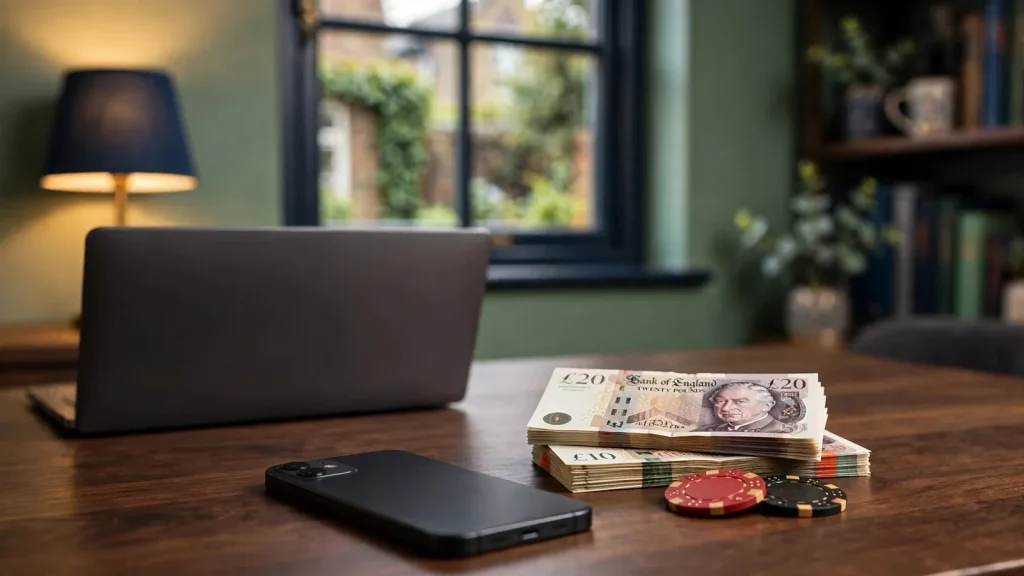
Bank-transfer steps vary by payment route, and a missing or incorrect reference may mean an incoming payment needs extra checking.
How bank transfers work in an online casino cashier
A bank transfer moves money from your bank account to a casino’s payment account, or back again, through a bank payment route. In the cashier, selecting a transfer option starts the payment instructions: you may be asked to authorise a payment through your bank or to use details supplied for the transfer. The exact steps depend on the route the casino has connected to its cashier.
“Bank transfer” does not always describe one single process. A conventional transfer is initiated through your bank’s own service, using the payment details or instructions shown by the casino or its payment provider. The payment then has to be identified and credited to your casino balance. The casino may ask for a reference so it can match the incoming funds to your account. If the reference is missing or entered incorrectly, the transfer may need additional checking before it appears in your balance.
Open banking is a different way to initiate a bank payment. Rather than entering transfer details separately, you select your bank and approve the payment through its authentication process. The cashier or a payment service passes the payment request to your bank, where you confirm it. The money still comes from your bank account; open banking changes how the payment is authorised and routed, not the source of the funds.
If you’re looking for a casino that accepts wire transfers in the UK, check that wire transfer is available as a deposit method before signing up. The payout information below gives you one point to consider, but does not confirm which deposit methods each operator accepts.
-
Dieselwin
- Payout speed
- 1-3 business days
Dieselwin has a stated payout speed of 1–3 business days. Confirm directly whether wire transfer is available for deposits.
-
SpinFormula
- Payout speed
- 1-3 business days
SpinFormula’s stated payout speed is 1–3 business days. Check with the operator whether you can deposit by wire transfer.
-
EvoSpin
- Payout speed
- 1-3 business days
EvoSpin lists a payout speed of 1–3 business days. Its wire-transfer deposit availability is not specified here, so verify it before you sign up.
-
Amunbet
- Payout speed
- 1-3 business days
Amunbet has a stated payout speed of 1–3 business days. Contact the operator to confirm whether it accepts wire-transfer deposits.
-
WinBeast
- Payout speed
- 1-3 business days
WinBeast’s stated payout speed is 1–3 business days. Check whether wire transfer is offered as a deposit method.
-
NightLuck
- Payout speed
- 1-3 business days
NightLuck lists a payout speed of 1–3 business days. Verify directly that wire transfer is available for deposits.
-
Zombillion
- Payout speed
- 1-3 business days
Zombillion has a stated payout speed of 1–3 business days. The available information does not establish whether you can deposit by wire transfer.
-
NightWin
- Payout speed
- 1-3 business days
NightWin’s stated payout speed is 1–3 business days. Confirm with the operator whether it accepts wire-transfer deposits.
-
Jetsetspins
- Payout speed
- 1-3 business days
Jetsetspins lists a payout speed of 1–3 business days. Check directly whether wire transfer is an available deposit option.
-
BeOnBet
- Payout speed
- 1-3 business days
BeOnBet has a stated payout speed of 1–3 business days. Wire-transfer deposit availability is not specified, so confirm it with the operator.
These options can appear similar in a cashier because both may be labelled with bank-related wording. They are not interchangeable, however. A conventional transfer may rely on instructions that you carry out through your bank, while an open-banking payment involves a connected authorisation flow. The casino’s cashier determines which route is offered, and a bank transfer option at one site does not establish that another site offers the same type of transfer.
A specialist casino review reports that bank transfers and open-banking services can support instant deposits and fast withdrawals at many sites. Treat that as a description of possible performance, not a promise for every casino or every transaction. The word “instant” can refer to one stage of the process: a bank may authorise a payment promptly, for instance, while the casino’s balance update or a later payout follows a separate process. Check the wording shown for the particular route rather than assuming that all bank payments move at the same speed.
The cashier is the point where the casino’s payment system presents the route it can process. After you choose it, the payment request passes through the relevant provider and banking service before the casino receives confirmation. Each stage can affect when the transaction is recognised. A successful authorisation means the payment has been approved at that point; it does not necessarily mean the funds have already been credited to your casino account.
 Casinos That Accept Wirecard in the UK: Payment ChecksLearn why a Wirecard deposit may fail or be excluded from a bonus, and how to check a casino’s cashier and promotion…
 Casinos That Accept Maestro in the UKLearn how to check Maestro eligibility in a casino cashier and why game availability is separate. Visa and Mastercard acceptance does not…
Timing can also depend on when the instruction is sent. Banks and payment services may apply cut-off times, so a transfer started after a processing window can be handled later than one submitted earlier. Weekends can affect delivery where the route depends on banking processes that do not move funds in the same way on non-working days. These details matter even when the payment screens appear to accept the instruction straight away. A confirmation message is evidence that a step has completed, not a guarantee that every later step has finished.
Currency is another part of the route. If your bank account and casino account use different currencies, conversion may take place as the payment is processed. That can affect the amount credited or returned, as well as the time needed for the transaction to settle. A specialist casino review identifies currency conversion, alongside cut-off times and weekends, as a factor that can affect bank-transfer delivery. Confirming the account currency before making a payment helps you understand whether conversion is part of the process.
The term “wire transfer” is sometimes used broadly for a bank payment, but the cashier’s label alone does not tell you exactly how it will be handled. The route may involve a bank’s transfer service, an open-banking connection or a provider that coordinates the payment. Look at the instructions presented after selecting the option: they show whether you will approve the payment through your bank or complete a separate transfer using supplied details. Do not assume that a method described as a bank transfer has identical steps across different sites.
For a bank wire transfer casino payment, the useful distinction is therefore between the source of the money and the mechanism used to move it. Your bank account is the source; the payment route determines how you authorise the transaction and how it is passed to the casino. Both conventional bank transfers and open banking can support rapid movement in some cases, but availability and performance depend on the cashier’s setup and the stages the payment must pass through.
Checking whether a casino supports your bank transfer route
A casino’s general payment information does not confirm that a bank transfer will be available to you. The cashier is the practical place to check: payment options can depend on the account, the selected currency and the route presented for your transaction. Before you deposit, sign in and inspect the available methods rather than relying only on a logo or a broad statement on a payment page.
Look for a method explicitly described as a bank transfer or wire transfer. If the cashier offers several bank-related choices, read the labels and any accompanying instructions carefully. A bank transfer and an open-banking service are not interchangeable names for one route; selecting one does not establish that the other is available. If the wording is unclear, check the casino’s help pages or ask its support team to identify which option applies to your bank and account.

The relevant question is not simply whether the casino accepts transfers in general. You need to establish that the method displayed can be used from your location, with your account and the bank account you intend to use. Follow the cashier only as far as the point where it shows the method’s requirements. Do not confirm a payment to test whether it works. If the option is absent, or the instructions do not fit your circumstances, seek clarification before proceeding.
Check the account currency first
Confirm the casino account’s currency before your first transaction. A specialist review reports GBP as a supported currency, but that does not establish that every casino account is denominated in pounds or that the option applies to every customer. Check the currency shown in your own account or cashier. If the casino account and the bank transfer use different currencies, conversion may occur, so the amount credited may not match the amount sent at the exchange rate you expected.
Do not infer the account currency from the language of the website, the currency symbol used in a general promotion or the fact that the casino serves customers in the UK. Look for the currency attached to your account or displayed during the cashier flow. If you cannot find it, ask support to confirm the account currency and whether the transfer route would involve conversion. Resolve that point before authorising the payment.
A change of currency may not be available after an account has been created, so do not assume that you can correct a mismatch later. Check any currency choice presented during registration or in account settings, and make sure it agrees with the currency you intend to use. The aim is to understand the route and denomination before money leaves your bank, not to discover a conversion after the transaction has been started.
Match the route to your account
Check that the cashier’s instructions correspond to the bank account you plan to use. The name and account details should be yours, and the payment route should be one the casino has made available for your account. If the cashier refers to a particular transfer option, follow that option’s stated process rather than substituting another bank-related service because it appears similar.
If you are checking on a mobile device, make sure the method remains available in the cashier you will use to deposit; a payment-method page viewed outside your account may not show the same choices. Likewise, do not assume that a route listed in an old review or third-party payment guide is still enabled. Availability can change, so the current cashier and the casino’s own instructions are more relevant to your decision.
Where the cashier’s wording is incomplete, ask a precise question: whether bank transfer is available for your account, whether your bank can use the displayed route, and which currency your casino account will receive. Support can clarify the casino’s stated process, but it cannot decide whether your bank will apply its own conditions. Check with your bank as well if its requirements are unclear.

Before depositing, verify that the casino holds a current UK Gambling Commission operating licence by checking the licence number on the Commission’s public register. Then confirm the transfer option and account currency in the cashier. These checks establish whether the route is presented for your account and whether the currency matches your intention; they do not require you to make a test payment.
What to check before choosing a casino bank transfer
A casino may support a bank-payment option without every version of that option being suitable for your account. Before choosing a site, look at the terms attached to the exact route shown in its cashier. Treat “bank transfer” as a label to investigate, not as a complete description of how your payment will be handled.
Check the route against your intended use
Decide what you need the payment method to do. You might want to fund the account directly from your bank, use an open-banking connection, or make a conventional transfer using the casino’s payment instructions. These routes can involve different steps and conditions, so confirm which one the cashier actually offers. Do not assume that a general reference to bank payments covers every route.
Then consider how you expect to use the account. If you plan to make occasional deposits, a route that requires more manual steps may still be workable. If you expect to use it repeatedly, check whether the process is clear and whether the casino explains how to repeat a payment correctly. Avoid proceeding if the instructions do not make clear which details you must enter or what information must accompany the transfer.
Do
- Confirm which specific route the cashier offers
- Check if the process for repeating payments is clear
- Verify which details must accompany the transfer
Don't
- Assume a general reference to bank payments covers every route
- Proceed if instructions for entering details are unclear
- Substitute another bank service because it appears similar
Read the deposit rules for the selected method
Look for the minimum and maximum amounts that apply specifically to bank transfer. A casino may set a different maximum for each transaction, for a day, or for a month. Those caps can also depend on your payment method and account status. A limit shown for another deposit method is not evidence that the same limit applies to a bank transfer.
Check whether the stated cap fits the amount you intend to deposit, rather than relying on a general limit described elsewhere on the site. If the cashier gives no clear figure, or the terms appear to conflict, ask customer support to confirm the applicable limit before initiating the payment. A specialist review may describe limits that applied when it was written, but the casino’s current cashier and terms are the relevant places to verify your own account’s conditions.
Also check whether the rules distinguish between a transfer started from the cashier and one sent through your bank’s own payment service. If the instructions are for a particular route, do not substitute another route simply because both involve a bank account. A payment made in a different way may not match the casino’s process.
Check the terms you will be asked to accept
Read the payment terms alongside the casino’s general account conditions. Make sure you understand what the cashier asks you to confirm before submitting a deposit, and keep the instructions available while completing the payment. If the required details are unclear, pause and seek clarification rather than guessing.

For a UK-facing casino, confirm that the site is operating under the relevant UK Gambling Commission licence. Remote gambling licensees serving customers in Great Britain must hold the appropriate licence, and online gambling is legal in the UK through licensed sites. You can check the operator’s licence on the Commission’s public register. This is a separate check from confirming that a particular bank-payment route appears in the cashier.
Before a first deposit, expect the operator to ask you to set a financial limit and make account-level limit controls accessible. Consider those controls as part of your decision about whether the site and its payment setup suit you. A payment option should not be assessed in isolation from the account rules surrounding its use.
The final check is practical: can you identify the exact bank route, understand the amount restrictions that apply to it, and follow its instructions without making assumptions? If any of those points remains unclear, resolve it before sending funds.
What affects a casino wire transfer payment
The amount that leaves your bank account may not be the same as the amount credited to your casino balance. A specialist payment-method review identifies several possible cost points: the casino, a payment provider, your bank or account issuer, currency conversion and the payment network. These are separate charges, so check each part of the route rather than treating “bank transfer” as one fee.
Potential cost points for transfers
Costs can be applied by the casino, a payment provider, your bank or account issuer, the payment network, or through currency conversion spreads.
Charges along the payment route
A casino may apply a charge to a deposit, while a provider handling the transfer may add its own fee. Your bank can also charge for sending money or for processing a particular type of payment. Whether any of these applies depends on the casino’s terms, the provider used and your bank’s tariff; a fee at one stage does not establish that the others are free.
A network charge is another possible component. It relates to the infrastructure used to move the payment, rather than necessarily appearing as a casino fee. The cashier or payment instructions may show charges associated with the route, but check your bank’s own terms as well. If a fee is deducted before the casino receives the money, the credited amount may be lower than the amount you intended to deposit.
Do not assume that a displayed casino fee is the whole cost. Compare the amount debited from your account with the amount the cashier says will be credited, and look for any separate provider or bank charge. Where the route’s terms are unclear, ask the relevant provider or bank before confirming the transfer.
Currency conversion can hide a cost
Currency matters because the payment can involve an exchange even when the transfer itself has no visible flat fee. Confirm that your casino account is held in GBP before making the payment. If the casino balance and the sending account use different currencies, conversion may take place and the rate applied can include a spread: the difference between the exchange rate used for the transaction and a reference rate.

A specialist review notes that this spread can cost more than a clearly stated fixed charge. That is why comparing only the advertised fee can give a misleading result. For the same intended deposit, consider both the flat charges and how much currency the conversion delivers to the casino account. Your bank or provider may set the conversion rate, so the casino’s fee information alone may not show the full cost.
Compare the total, not one fee
To estimate the cost of a casino wire transfer, trace the payment from your account to the casino balance. Identify any casino charge, provider fee, bank or issuer fee, network cost and conversion spread that applies to your route. Some routes may have no charge at one stage but still incur costs elsewhere; others may display a fee while avoiding currency conversion.
The useful comparison is the total amount lost to charges and exchange-rate differences for the transaction you intend to make. Check the cashier’s payment terms, the provider’s conditions and your bank’s tariff, then compare the expected debit with the amount credited. This keeps a low headline fee from being mistaken for a low overall cost.
Depositing by bank transfer: minimums and limits
A bank transfer does not have one deposit amount that applies across every casino. The minimum and maximum are set for the payment route offered by the casino, and the limits shown for that route may differ from those for a card or another method. Treat the cashier’s current figures as the rules for your account, rather than assuming that a limit mentioned elsewhere will apply.
A specialist review describes the minimum deposit at UK casino sites as starting in the £10–£20 range, depending on the payment method. That is a guide, not a fixed bank-transfer threshold: a casino may set a different minimum for its transfer option. Check the amount displayed in the cashier before you confirm the payment. If the amount you intend to send is below the stated minimum, the deposit may not be accepted through that route.
Maximums can also be structured in more than one way. A casino may apply a cap to an individual deposit, a total deposited over a day, or a total over a month. These are separate controls: being below the per-transaction maximum does not necessarily mean that another deposit will fit within a daily or monthly allowance. The applicable figures can depend both on the payment method and on your account status, so a limit shown for one customer or route may not describe yours.
Your own account controls matter too. UK remote gambling operators must ask new customers to set a financial limit before they make their first deposit, and they must make account-level limit controls accessible. This is a separate safeguard from the cashier’s minimum and maximum for a bank transfer. A payment can fall within the route’s stated limits but still be restricted by a lower limit you have set on your account. Check both before arranging the deposit; changing an account limit should not be treated as a way to bypass a payment-method cap.

Age verification is also required before an operator lets you deposit. If the account has not completed the necessary checks, access to depositing may be restricted even when the intended amount fits the displayed range. This is an account-status issue, not evidence that the bank-transfer method has a different minimum.
Before sending money, confirm the minimum and the relevant maximums in the casino cashier, then compare them with your intended deposit and the account limits shown in your profile. If the figures are unclear or differ between the cashier and the payment instructions, ask the operator to clarify which limit applies to your account before proceeding.
How long a casino bank-transfer deposit can take
A bank-transfer deposit does not have one fixed delivery time. The point at which you send it matters, as do the banks’ processing schedules and whether the payment needs currency conversion. A specialist review identifies cut-off times, weekends and conversion as factors that can affect when a transfer arrives. These factors explain why the same payment route may not produce the same result every time.
A cut-off time is the point after which a bank may treat a payment as received on the next processing day. If you start a transfer after that point, its progress may not begin when you submit it. The casino cannot credit funds it has not received, so a delay at the sending bank can push back the point at which the deposit appears in your account. Check your bank’s payment information if you need to know how it handles transfers sent late in the day.
Estimating Arrival Time
-
1
Initiate Transfer
You submit the payment request through your bank or the cashier.
-
2
Bank Processing
The bank processes the payment, accounting for cut-off times, weekends, and public holidays.
-
3
Currency Conversion
If account currencies differ, the funds are converted before being sent.
-
4
Casino Recording
The casino receives the funds and credits them to your balance.
Weekends can also interrupt the sequence. If you send a payment when a bank is not processing it, the transfer may wait for its next processing period. The time you submit it and the calendar day it crosses therefore matter; a transfer sent near the end of a working day may follow a different path from one sent earlier. Public holidays may affect processing schedules too, so consider the calendar rather than assuming that elapsed time means continuous processing.
Currency conversion adds another variable. If the casino account and the sending account use different currencies, the amount must be converted as part of the payment process. That can affect when the casino receives a usable deposit and how much is credited. Confirming that your account is set to the currency you intend to use can help avoid an unexpected conversion step.
When estimating arrival, separate the stages: you initiate the transfer, the banks process it, and the casino records the funds after receipt. The cashier may show a payment as pending while the process is incomplete; that status does not, by itself, identify which stage is causing the wait. Keep the payment confirmation and reference details so you can compare them with the casino account and contact support if the deposit does not appear.

If the funds have not arrived when expected, check the payment status with your bank first, then give the casino the transfer reference and ask whether it can locate the incoming payment. Avoid sending the same deposit again just because the first one is not yet visible: if the original transfer later arrives, you could end up with two deposits. Check the casino’s stated processing guidance for the specific route, since another site’s timing cannot establish when yours will credit a transfer.
Withdrawing casino funds to a bank account
A withdrawal request is not simply a bank transfer sent as soon as you press the button. The casino first has to review the request, and the payment route may be constrained by anti-money laundering controls. UK rules commonly require a payout to go back to the payment source used to fund the account. This can affect whether you can select a bank account directly, particularly if you deposited using another method.
Check the cashier’s withdrawal options and any instructions attached to your deposit method before requesting payment. If the casino directs funds to the original source, entering different bank details may not redirect them. An alternative route can require extra checks, so ask the operator what it accepts rather than assuming that every bank account in your name is eligible.
The time shown for a withdrawal can include the casino’s own review, not just the time taken by the bank to process a transfer. A specialist review notes that the first payout may take longer while verification is completed; this is a reported possibility, not a fixed timetable for every operator. The operator may need to establish that the account and payment details are consistent before it approves the request.
That makes KYC relevant before you need to withdraw. If the casino asks for identity or payment information, provide it through the account’s approved verification process and check whether the documents have been accepted. A request that is waiting for review is not yet at the bank-transfer stage, so a bank’s processing speed cannot resolve that hold.
A specialist review also identifies internal approval and completed verification as factors in withdrawal speed. Treat any displayed processing estimate as conditional on the casino approving the request and having the information it needs. If a withdrawal remains pending, check its status in the account and contact the operator through its stated support channel; distinguish a casino review from a transfer that has already been released.
Before submitting, confirm the destination details and the route the cashier will use. This helps you understand whether the request is awaiting casino approval, subject to verification, or has moved on to payment processing. It also avoids treating a bank-account withdrawal as a single step with one uniform timeline.
How to assess a bank-transfer casino for your needs
There is no payment method that is automatically the cheapest at every casino. A specialist review may describe a route as low-cost, but the charge for your own transaction depends on the casino, the payment provider, your bank and the currencies involved. Compare the total for the amount you intend to move, rather than choosing from a general label such as “free”.

Start with the casino’s stated charge for the selected bank-transfer route. Then check whether the provider adds a fee and whether your bank charges for sending or receiving the payment. A casino may waive its own charge while another party still applies one, so a single “no fee” notice does not necessarily describe the full cost.
Next, check the currency used by your casino account and the currency in which the transfer will be sent. If they differ, conversion may apply. Compare the exchange rate offered for the transaction with the rate you would receive through another available route. The difference is the conversion spread: it can matter more than a visible fixed charge, particularly when the fee itself appears small.
Include any network cost if the transfer uses a payment network that charges for processing. Do not assume this cost is included in the casino’s fee or the provider’s displayed rate; confirm which party applies it and how it is shown.
For a meaningful comparison, use the same intended amount and account currency for each option. Record the casino charge, provider charge, bank charge, conversion cost and network cost separately, then add them. If a charge cannot be established before you confirm the payment, treat the total as uncertain rather than assuming it is zero.
This method compares the transaction you plan to make, not a general ranking. The result can change if the amount, currency or payment route changes, so assess the actual cashier terms before proceeding.
- Identify the casino's stated charge for the route
- Check for additional provider or bank fees
- Account for potential network costs
- Calculate the currency conversion spread
- Sum all costs to find the total transaction expense
How casino winnings are returned by bank transfer
If you deposit by bank transfer, the casino may return eligible winnings to a bank account through that route. The destination is not always a matter of preference: remote gambling licensees apply anti-fraud and anti-money-laundering controls, and returning funds to the original payment source is a common part of those checks.
This is often described as a closed-loop approach. In practice, the casino records how money entered your account and may require a withdrawal to follow that payment path. If your bank transfer came from an account in your name, the cashier may ask you to select or confirm that account when requesting a payout. The available choices depend on the casino’s rules and the payment route it supports.
A different destination can trigger additional checks. For instance, if you ask for winnings to go to another bank account or payment method, the casino may need to establish that you control it and that the change is consistent with its payment rules. It may request documents or clarification before approving the alternative. That does not mean every alternative will be refused; it means you should not assume that any account you nominate can receive the funds.
The distinction between a payment route and an account matters. A casino might accept a bank transfer for deposits but set separate conditions for withdrawals, including which account can receive them. Read the cashier’s withdrawal instructions and the payment terms before relying on a particular destination.
When you request casino winnings by wire transfer, use the destination shown as eligible in your account and provide details that match the records held by the casino. If the original source is unavailable or you need to change it, contact the operator through its official support channel before submitting the request. That gives you a chance to learn what evidence is required and whether another route can be used, rather than assuming the change will be processed automatically.

Reducing friction and fraud checks on a bank transfer
A bank transfer is easier to reconcile when the casino account and the sending bank account identify the same person. If the name or other basic ownership details do not match, the transaction may need extra review before the casino can link it to your account. That does not by itself establish fraud, but it can make the payment harder to verify.
Use a bank account in your own name and enter your casino account details accurately when arranging the transfer. A typo, a shortened name that differs from the account record, or a payment sent from someone else’s account can create uncertainty about who initiated it. If your bank displays a reference for the transfer, copy it exactly as the cashier instructs so the casino can identify the payment.
The clearest pattern is often one named account used consistently for deposits and withdrawals. Keeping that link stable makes the ownership trail easier to follow. A wire transfer casino payment from a joint or business account may not be treated in the same way as one from an account held solely in your name; check with the casino before sending funds if the account ownership is not straightforward.

Be prepared to complete KYC if the casino asks for information to confirm your identity or account ownership. Provide details through the casino’s approved process, and make sure they agree with the information on your casino profile and bank account. Do not try to resolve a mismatch by changing the name on one record to make it appear consistent.
If a transfer is questioned, contact the casino through its official support channel and ask which detail needs clarification. Avoid sending another payment until you understand the issue, as a second transfer may not resolve the original one. Consistent account information and a payment route belonging to you cannot prevent every review, but they reduce avoidable ownership questions around a wire transfer payment to a casino.
What is the current minimum deposit?
The minimum deposit is usually £10–£20, depending on the payment method.
Why can a fast payout casino still delay my withdrawal?
A casino may need to approve the withdrawal internally, and first withdrawals can take longer while verification is completed. Bank cut-off times, weekends and currency conversion can also affect delivery.
Can I deposit in GBP?
Yes, GBP is supported. Check that your casino account is set to GBP before depositing to avoid currency conversion.
Are fast casino withdrawals guaranteed?
No. Withdrawal speed depends on the casino’s approval process and whether your account is fully verified.
Which method has the lowest fees?
There is no universally lowest-fee method. Compare casino and provider charges, bank fees, currency conversion spreads and any network costs for your transaction.
What is the fastest withdrawal method for UK casinos?
PayPal, open-banking services and debit cards linked to fast payout systems are generally among the quickest options.
Do UK casino withdrawals require verification?
Yes, verification may be needed, particularly for a first withdrawal. A casino’s approval process and whether your account is fully verified can affect payout speed.
Payments at UK Casinos: Methods Compared
Content created by the «myessayhelper» team