
Check Tether support before funding a casino account
 Available in US
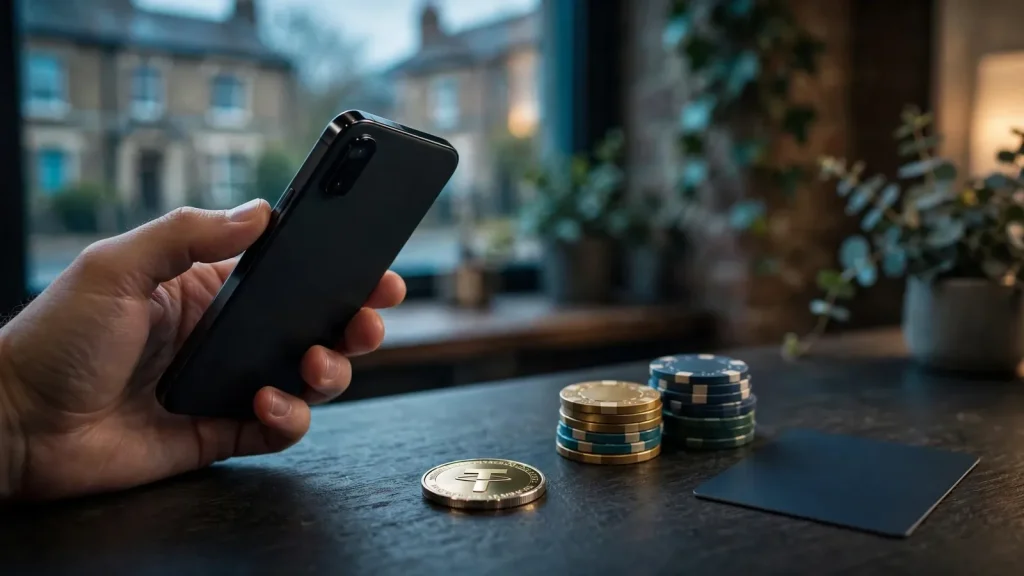
Tether availability depends on the account’s cashier, while payment method and the currency used for the casino balance are separate details.
How Tether Fits into an Online Casino Cashier
A casino’s general payment page is a starting point, not proof that you can use Tether. Payment information can describe methods available to some customers or in some circumstances. To check whether Tether is actually offered to you, sign in to the account and open the cashier’s deposit-method list. Look for Tether or USDT as a selectable option, rather than relying on a logo, an old review, or a general claim that the site accepts cryptocurrency.
The cashier is where a payment method becomes an account-level option. If Tether appears in a menu, that indicates the operator presents it for the transaction you are setting up. If it is absent, do not assume that a reference to crypto means Tether is supported: a site may list other cryptocurrencies without listing this one. The available choices can also differ between the operator’s public information and the signed-in cashier, so use the latter to confirm what is currently shown for your account.
Keep payment availability separate from the currency in which the casino records your balance. A cashier may offer a particular way to pay while the account itself is denominated in pounds sterling (GBP), or in another supported currency. A specialist review of the supplied payment pages reports GBP support, but that does not establish the currency selected for every account. Check the account settings or cashier before making a transaction. If the payment and account currencies differ, a conversion may be involved; confirming the account currency beforehand helps you understand which balance the cashier will display.
If you’re looking for a casino to use with Tether in the UK, payout timing is one detail worth checking alongside the payment options. Use this list as a starting point and confirm the current Tether arrangements before signing up.
-
Dieselwin
- Payout speed
- 1-3 business days
Dieselwin lists a payout speed of 1–3 business days. Check its current Tether payment options before you deposit.
-
SpinFormula
- Payout speed
- 1-3 business days
SpinFormula lists a payout speed of 1–3 business days. Confirm that its current payment options suit your Tether plans.
-
EvoSpin
- Payout speed
- 1-3 business days
EvoSpin lists a payout speed of 1–3 business days. You should verify its current Tether arrangements before choosing it.
-
Amunbet
- Payout speed
- 1-3 business days
Amunbet lists a payout speed of 1–3 business days. Check its current payment information to see whether it fits your Tether needs.
-
WinBeast
- Payout speed
- 1-3 business days
WinBeast lists a payout speed of 1–3 business days. Confirm its current Tether options before making a deposit.
-
NightLuck
- Payout speed
- 1-3 business days
NightLuck lists a payout speed of 1–3 business days. Check its current payment options to make sure Tether is available for your needs.
-
Zombillion
- Payout speed
- 1-3 business days
Zombillion lists a payout speed of 1–3 business days. Verify its current Tether arrangements before signing up.
-
NightWin
- Payout speed
- 1-3 business days
NightWin lists a payout speed of 1–3 business days. You’ll want to confirm its current payment options before using Tether.
-
Jetsetspins
- Payout speed
- 1-3 business days
Jetsetspins lists a payout speed of 1–3 business days. Check whether its current Tether options match your requirements.
-
BeOnBet
- Payout speed
- 1-3 business days
BeOnBet lists a payout speed of 1–3 business days. Confirm its current Tether payment arrangements before you deposit.
The distinction matters because a payment method and an account currency answer different questions. The method tells you how the cashier accepts a transaction; the account currency tells you the unit used to express the account balance. Seeing GBP listed as supported does not, by itself, mean that every deposit is processed in GBP, nor does seeing Tether in the cashier establish that the account balance is held in Tether. Read the currency label alongside the payment option instead of treating one as evidence of the other.
UK-facing casino cashiers can present several different categories of payment. Visa and Mastercard debit cards, bank transfers, e-wallets and cryptocurrencies are among the methods mentioned in a specialist review of casino payment pages. Their appearance in that review should not be read as a guarantee that every operator offers each route, or that a particular option is available to every customer. Compare the options shown in the cashier for the account you are using.
The category also tells you little about what the casino will accept in practice. A card logo does not confirm that every card product is eligible, and a bank-transfer label does not tell you which service or account route is offered. For Tether, the useful check is the named currency in the available method list. A generic “crypto” label is less specific: it does not identify which assets the cashier makes available.
 Casinos That Accept Ukash in the UK: Payment OptionsLearn how to check casino payment pages, compare prepaid alternatives and verify deposits and withdrawals. UK-licensed casinos cannot accept credit-card gambling
 Casinos That Accept InstaDebit in the UKCheck whether InstaDebit is available in the cashier, whether deposits qualify for slot bonuses, and what to check about withdrawals, limits, timing…
For UK customers, the distinction between debit and credit cards is important when comparing conventional routes. UK-licensed casinos cannot accept credit-card payments for gambling. Visa and Mastercard may appear as card brands, but the logo alone does not tell you whether the cashier is presenting a permitted debit-card route or whether your own card product is eligible. Check the method description and the terms shown by the operator; do not infer acceptance of credit-card payments from a familiar card logo.
Payment pages can also mention e-wallets or other services without making them equivalent to Tether. Each is a separate route with its own availability in the cashier. An option being familiar or commonly discussed does not confirm that it can be used for your account, and an operator’s general list may not reflect the choices currently displayed after you sign in. For a practical check, compare the cashier’s selectable methods with the account’s stated currency before you proceed.
When a page says that a casino accepts Tether, treat that as a prompt to verify the cashier, not as the final confirmation. Check that the named option is present in the account’s payment menu and note the currency shown for the balance. If the cashier offers only other cryptocurrencies, or shows no crypto option, the general wording is not enough to establish Tether availability. This simple distinction prevents a list of payment brands, currencies and account settings from being mistaken for one single promise.
Using Tether for Slot Deposits and Withdrawals
A Tether payment funds your casino account; it is not a separate payment mechanism inside a slot. The cashier handles the transaction, and the resulting balance is what you use for casino play. To understand the route before committing money, inspect both sides of the cashier flow: the deposit options and the withdrawal options. Seeing Tether beside “Deposit” does not, by itself, establish that it can also be selected for a payout.
Start by opening the cashier while signed in and checking which payment methods are available to your account. Availability can depend on the operator’s current arrangements and the details of your account, so a general page describing a casino’s payment methods is not a substitute for the options shown in your own cashier. Before sending funds, check the deposit screen for the amount it will accept and the account balance it will credit. If the displayed figures or currency are unclear, pause and ask the operator to explain them rather than estimating what will arrive.
The stated minimum is not necessarily identical across payment methods. A specialist review gives a £10–£20 starting range for casino deposits, while noting that the selected method affects the threshold. Treat that as a broad indication, not a promise that a particular Tether cashier will accept a deposit at either end of that range. The amount shown at the point of payment is the relevant one for your transaction. Check any maximum shown there as well, since the cashier may apply limits to the selected route or account.

Once you choose Tether, follow the payment instructions generated by the casino’s cashier. Do not reuse an old instruction or rely on details copied from a different account: payment pages can present transaction-specific information. Check the amount and destination details on the casino page before confirming the transfer in your own payment service. After sending, allow the cashier to update the casino balance before treating the deposit as available. If the balance has not changed, keep the payment confirmation and contact support; do not send another payment simply because the first one is not yet reflected.
For slot play, the important distinction is between the payment transaction and the casino balance. A deposit may be accepted by the cashier but still need to appear in the account before it can be used. Check the balance in the account area rather than assuming that a completed transfer notification means the casino has credited it. The cashier or account history should give you a record of the deposit and its status.
Before depositing, also inspect the withdrawal page. Confirm whether Tether is listed as a payout option for your account and note any conditions attached to it. Casinos may show different choices for deposits and withdrawals, and the available withdrawal route can be affected by the earlier payment. UK anti-money-laundering controls generally require a payout to go back to the original payment source. That means the route you use to fund the account can matter later, even if another option appears on the withdrawal screen.
Do not assume that a Tether deposit guarantees a Tether withdrawal. If the cashier indicates that the original source must be used, follow that instruction; if it lists another route, check whether the operator requires additional steps before you select it. The relevant point is the casino’s stated process for your account, not the fact that the deposit itself used a cryptocurrency.
Do
- Check both deposit and withdrawal options in the cashier
- Verify the minimum deposit amount on the live payment page
- Retain transaction records until the balance updates
Don't
- Assume a deposit method is automatically available for payouts
- Reuse old payment instructions or details from other accounts
- Send a second payment if the first is not immediately reflected
A practical sequence is therefore: inspect the deposit method and displayed minimum; check the withdrawal options before sending funds; read the instructions on the live payment page; confirm the deposit has reached the casino balance; and retain the transaction record. This lets you assess the full route from funding a slot account to requesting a payout, rather than discovering after depositing that the cashier’s withdrawal path differs from what you expected.
What a Tether Casino Payment Can Cost
The amount that leaves your wallet is not necessarily the amount credited to your casino balance. A Tether transaction can involve charges at several points: the casino, a payment provider, an exchange or wallet service, and the network that processes the transfer. Which costs apply depends on the route you use and the terms shown by each service.
Start with any charge stated by the casino. It may appear as a deposit or withdrawal fee, or be included in the transaction terms rather than deducted as a separate line. Then check the service through which you obtain or send Tether. That provider may charge for buying, selling or transferring it. If funds pass through a bank or another financial service, an issuer or bank charge may also apply. A specialist payment review identifies these as possible parts of the total cost, not charges that necessarily apply to every transaction.

The exchange rate is a separate consideration. If your casino balance is held in pounds but you deposit Tether, the amount credited depends on how the payment route converts between the two. A provider may use a rate that differs from a reference market rate; the gap is the conversion spread. It can reduce the value you receive even when the transaction shows no obvious flat fee. A specialist payment review notes that this spread can exceed a visible fixed charge, so comparing only the listed fee can give an incomplete picture.
Before confirming a transaction, check the quoted Tether amount, the value the casino says it will credit, and whether the account uses pounds or another currency. If conversion occurs at more than one stage, each rate can affect the final balance. Do not assume that a displayed amount is the full cost simply because the casino does not add a separate fee: costs may be built into the rate or charged by another service.
Network fees are another possible component. They relate to processing a transfer, rather than to the casino’s own pricing. The amount can vary with the transaction route and prevailing network conditions. Treat any fee shown by your wallet or payment provider as part of the total you pay, while keeping it distinct from a casino charge. The cashier’s stated amount and the wallet’s final confirmation may therefore describe different parts of the transaction.
A useful comparison is to calculate the total cost for the amount you actually plan to send. Include the casino’s charge, provider or bank fees, the exchange-rate spread, and any network fee. Then compare that with the amount expected to reach the casino balance. Repeat the calculation for a withdrawal if the route has separate payout charges or a different conversion rate.
There is no payment method that is cheapest in every case. A route with no visible casino fee may still have provider costs or an unfavourable spread; another may show a flat charge but convert at a different rate. The relevant comparison is the net value credited or received after all applicable costs, not one fee in isolation. Check the figures displayed by the services involved before authorising the payment, since their charges and rates can change.
Tether, GamStop and UK Casino Account Checks
A Tether option in a casino cashier tells you about a possible way to fund an account. It does not tell you whether the operator is part of GamStop, whether an account is eligible to register, or whether any safer-gambling restriction applies to you. Payment choice and account status are separate checks.
This distinction matters because the same payment label can appear on services with different operating arrangements. Do not use the presence of Tether—or its absence—as evidence of a casino’s GamStop status. Check that status independently using information about the specific operator. Likewise, seeing “casino with Tether UK” in a description does not establish that the service is authorised to offer remote gambling to customers in Great Britain.
For real-money gambling offered to customers in England, Scotland and Wales, the operator must hold the relevant UK Gambling Commission licence. The licence concerns the operator’s authority to serve that market; the cashier’s payment methods describe how transactions may be made. Those are different questions, and one answer cannot substitute for the other.
The pre-deposit financial-limit step
A remote operator must invite a new customer to set a financial limit before allowing the first deposit. The operator must also make account-level limit controls accessible, so you can manage limits through the account rather than treating the initial prompt as the only opportunity to do so.

That requirement is not switched off by paying with Tether. If the cashier offers a crypto payment route, the account process still applies. The relevant question is not whether the payment is in pounds or Tether, but whether the required limit-setting prompt and account controls are presented as part of the customer journey.
Take time to understand what the account limit controls cover and how to access them before depositing. A payment confirmation does not show that you have reviewed or set an appropriate limit; it only relates to the transaction. If the process is unclear, pause and ask the operator to explain it before proceeding.
Keep the checks separate
When considering online casinos that accept Tether, assess the operator and your own account position independently from the payment method. A cashier may show that Tether is available, but that display cannot confirm GamStop participation or determine whether you should be able to open or use an account. Conversely, an account-status check does not confirm that a particular crypto route is available.
If you have self-excluded through GamStop, do not treat a different payment method as a way around that decision. Tether does not change the purpose of account-level safer-gambling controls or establish an exception to them. If you are unsure whether a restriction applies, resolve that question directly rather than testing it by attempting a deposit.
The useful sequence is therefore to check the operator’s UK regulatory position, establish the relevant account status separately, and confirm that the required financial-limit controls are available before funding the account. Keep the Tether option in its proper place: it is a payment choice, not proof of eligibility, regulatory status or an exemption from safer-gambling requirements.
Checking Crypto Payment Compatibility Before You Deposit
A casino’s general payments page can indicate that it handles cryptocurrency, but that does not establish that Tether is available to you. The useful check is the cashier attached to your account: sign in, open its deposit options and look for Tether or USDT as a selectable method. A logo in a footer, an old review, or a general statement about crypto support is not the same as a live option in the cashier.
Availability can depend on the account and the payment route presented to you. Check that the option is selectable, rather than merely named in an information page. If selecting it opens instructions, read them before continuing: they should identify what asset the payment page expects and provide the details needed to make that payment. If the cashier offers a route you do not recognise or cannot use, do not send funds on the assumption that another route will work.
The payment page confirms a limited set of things. It can show that the casino is currently presenting a particular method for your account and, where provided, the asset and destination details for the transaction. It does not by itself prove that every crypto route is supported, that the method will remain available later, or that it is available for withdrawals as well as deposits. Check the cashier’s withdrawal options separately before committing funds; a deposit method should not be treated as a two-way option unless the operator presents it for both purposes.

Treat third-party payment summaries as a starting point, not as confirmation. A specialist review of casino payment pages may list conventional methods such as Visa, Mastercard, bank transfer and e-wallets alongside cryptocurrencies, but those lists can become outdated or may not reflect the options shown to your account. Even a listed card brand does not confirm current UK availability or eligibility for your particular card product. The live cashier is the relevant check.
For a UK account, also distinguish a payment option from permission to use any kind of card. UK-licensed casinos cannot accept credit-card payments for gambling. A payment page that names a card brand does not override that restriction; check that the eligible product is permitted and that the cashier explicitly offers it for your account.
Before proceeding, make sure the asset shown in the casino cashier matches the asset you intend to send, and that you can follow the instructions displayed on the payment page. Do not infer support from a wallet balance, a cryptocurrency’s popularity, or another casino’s cashier. If the option is absent, unclear, or inconsistent between the casino’s information page and its live cashier, ask the operator to confirm the route before transferring anything. The confirmation you need is specific: that the cashier currently supports your intended Tether payment route for your account.
How to Assess a Tether Casino Without a Rankings List
A list of Tether casinos is only useful if it helps you check how a particular account handles deposits and withdrawals. A payment logo or a mention of Tether on a promotional page does not establish that the option is available to you, or that it can be used for both directions of payment. Treat each casino as a set of conditions to verify, rather than relying on a single “best” label.
- Verify Tether is selectable in the signed-in cashier
- Confirm deposit and withdrawal procedures are described
- Check the account currency and potential conversion
- Identify required approval or verification steps for payouts
- Validate the operator's licence on the UKGC public register
Start with the cashier while signed in, before transferring funds. Check whether Tether appears as a selectable method for your account and whether the page explains what happens after you choose it. Then read the payment terms for any conditions on withdrawals. A deposit option alone does not tell you whether a later payout can use the same route or whether another procedure applies.
Next, inspect the account currency. A specialist review reports that GBP is supported on the pages it examined, but that does not establish the setting for every casino or account. Confirm the currency shown in your own account before the first transaction. If the balance is held in another currency, a payment may be converted, so the displayed Tether amount and the casino balance may not be a direct one-to-one match.
Withdrawal conditions deserve separate attention. A specialist review notes that processing includes the casino’s internal approval, and that a first withdrawal can take longer while verification is completed. Timing also depends on whether your account is fully verified and how the casino handles approval. Look for the stated steps and any account checks, rather than treating a payment method’s advertised speed as the time it takes for money to reach you.
For a practical comparison, record the same details for each casino you are considering:
- Is Tether selectable in the signed-in cashier?
- Are deposit and withdrawal procedures both described?
- What account currency is displayed, and is conversion involved?
- What approval or verification steps apply before withdrawal?
This is more informative than comparing promotional claims because it separates payment availability from the conditions that govern getting funds out. It also avoids assuming that a Tether slot account has a different withdrawal process simply because the balance was funded with cryptocurrency.
For a UK-facing casino, verify the operator’s licence number on the UK Gambling Commission’s public register before depositing. A payment option does not establish that an operator is authorised to serve customers in Great Britain.
The result need not be a ranked Tether casino list. It can be a short set of candidates for which you have confirmed the cashier option, currency and withdrawal route. If any of those details are unclear, ask the operator before sending funds; do not treat an unanswered detail as confirmation.
Checking TRC20 and ERC20 Support in the Cashier
Tether (USDT) can be presented with different network labels. TRC20 and ERC20 are not interchangeable choices: the network selected in the casino cashier must match the network selected in the wallet or exchange used to send the funds. Seeing “Tether” or “USDT” on a payment page does not, by itself, confirm which route the casino accepts.
Open the cashier’s deposit screen and select Tether, if it is offered. Read the network shown on the payment instructions before creating a transfer. The page should identify the supported route clearly, such as TRC20 or ERC20. If it offers a network selector, check which option is active rather than relying on a default selection. A reference to a Tether TRC20 casino or an ERC20 Tether casino elsewhere does not establish what this particular cashier supports now.
Then check the sending screen in your wallet or exchange. Select the same network as the cashier displays, and compare the resulting payment details before confirming. Do not choose a network because its name looks familiar, because another casino uses it, or because the asset is labelled USDT in both places. The relevant check is an exact match between the casino’s instructions and the route selected for the transfer.
Match Network Routes
-
1
Select network in cashier
Open the deposit screen and identify the supported network, such as TRC20 or ERC20.
-
2
Match in wallet
Select the exact same network in your wallet or exchange to match the casino's instructions.
-
3
Compare details
Review the resulting payment details on both screens before confirming the transfer.
If the cashier shows only “Tether” and gives no network information, pause. Do not guess from an address format or from a general help page that may describe a different payment option. Ask the casino’s support team to confirm the network available for your account and the current deposit instructions. Proceed only when the cashier’s route and your sending option are clear and consistent.
Treat the displayed payment details as specific to that transaction. If you return to the cashier later and start a new payment, read the instructions again rather than assuming the earlier network selection still applies. A change in the displayed route means you should stop and check the sending details again before authorising anything.
Network selection is a compatibility check, not a cost comparison. A specialist payment review notes that crypto transactions can involve network fees as well as provider or casino charges, but the route label alone does not tell you the total cost. To check whether a TRC20 Tether casino UK or ERC20 option is usable, rely on the current cashier instructions and match them to your wallet’s selected network.
Tether Deposits, Casino Bonuses and Promotion Terms
A cashier showing Tether as a deposit option does not establish that a Tether payment qualifies for a promotion. Payment availability and bonus eligibility are separate settings: the cashier tells you which route can move funds, while the promotion’s terms determine which deposits count.

Before making a deposit, open the terms for the specific offer you intend to claim. Check whether the offer names eligible payment methods and whether Tether, USDT or the relevant payment route is included or excluded. If the terms do not clearly answer that point, ask the casino’s support team before depositing and keep its response. Do not assume that a welcome bonus or deposit bonus applies simply because the cashier accepts Tether.
This distinction also matters when considering an offer described as a no-deposit bonus. The label alone does not show that a casino currently provides such a promotion, who can claim it, or what conditions apply. Check the operator’s own promotion page and its full terms; do not treat search wording or a third-party description as confirmation that an offer exists or is available to you.
The same method applies to other payment types. A specialist review has reported that PayPal may be excluded from bonus eligibility, while another specialist review has described Skrill and Neteller as often excluded from promotions. These are reports about offer conditions, not rules that apply to every casino or every promotion. The terms for the particular offer take precedence.
Before you confirm a payment, look for any requirement to activate or opt into the promotion and any stated restrictions on deposits or withdrawals. Read the complete terms rather than relying on a headline such as “welcome bonus”. If you pay with Tether while expecting a promotion, but the terms exclude that payment route or require an action you did not take, the casino may not treat the deposit as eligible.
An offer mentioning Tether does not make the account anonymous, nor does a crypto payment prove that bonus conditions have been met. Treat claims about an anonymous Tether casino or a USDT casino bonus as prompts to verify details, not as evidence of eligibility. The reliable check is the current offer wording supplied by the casino, matched against the payment method you plan to use.
Why Tether Does Not Guarantee a No-KYC Withdrawal
Using Tether, also called USDT, changes the payment route; it does not remove the casino’s checks on who owns the account. A Tether casino that advertises “no KYC” may still request documents or other information before approving a withdrawal. Treat that phrase as a claim to verify in the operator’s terms, not as a promise that you can withdraw anonymously.
Remote gambling licensees serving Great Britain must hold a UK Gambling Commission licence, and operators must verify a customer’s age before allowing a deposit. Payment in cryptocurrency does not replace those account requirements. Nor does it determine when a withdrawal will be released: the casino’s review of the account and withdrawal request remains part of the process.
A specialist casino review notes that first withdrawals can take longer while verification is completed. It also identifies account verification and the casino’s internal approval process as factors in payout speed. That means a crypto transfer may be ready to send only after the operator has finished its checks; the payment method alone cannot establish the full withdrawal timeline.
Before depositing, read the casino’s verification and withdrawal terms. Check what information may be requested, when it can be requested, and whether the operator can pause a payout while reviewing your account. If verification is incomplete, provide the requested information through the casino’s official account process and wait for approval before assuming the withdrawal is underway.
The practical distinction is simple: a no-KYC Tether casino claim concerns the operator’s verification policy, while USDT describes the currency used for payment. One does not prove the other. For a UK player, check the operator’s UKGC licence on the public register as well as its account and withdrawal rules; do not infer that crypto use exempts an account from checks.

Keeping BEP20 Payments Consistent from Deposit to Withdrawal
A casino cashier may display BEP20 as a route for Tether, but choosing that route does not make the payment anonymous or separate it from your account. The operator still needs to establish that the gambling account and the funds belong to the same customer. Matching your account details with the ownership details associated with your payment route can reduce avoidable questions about a transaction.
For a Tether BEP20 casino payment, check whose name is attached to the casino account and to any account or wallet service used to send funds. If the details do not match, the operator may pause a payment while it checks ownership. A mismatch is not proof of wrongdoing, but it can create extra steps before funds are credited or released.
The more predictable arrangement is to use one customer-owned account and keep the payment route consistent between deposit and withdrawal. This gives the casino a clearer transaction trail than switching between accounts or sources without checking its rules. Do not send funds from another person’s account on the assumption that the casino will treat the transfer as yours.

Closed-loop rules can affect the return journey. Anti-fraud and anti-money-laundering controls commonly require a casino to send funds back to the original payment source. If that source cannot be used, or you ask for a different route, the casino may request additional checks before approving the alternative. This can add friction even when the deposit itself went through.
Before using a BEP20 Tether casino UK cashier, read the payment and withdrawal conditions together. Confirm how the operator identifies the original source and whether it permits another withdrawal route if that source is unavailable. The cashier’s display of a payment option does not, by itself, explain how the casino will handle a later payout.
Keep the transaction details and account information consistent, and contact the operator before depositing if you cannot use the same source for a withdrawal. That can clarify the route in advance without assuming every casino handles USDT BEP20 payments in the same way.
Why must withdrawals return to the deposit method?
Returning funds to the original payment source is a common anti-fraud and anti-money-laundering control. Using a different route may require additional verification.
What is the fastest withdrawal method for UK casinos?
PayPal, open banking services and debit cards linked to fast payout systems are generally among the quickest. The casino’s approval process and your account verification status also affect how soon you receive the money.
Are Visa and Mastercard deposits definitely debit cards?
No, the card logos alone do not identify the card product or confirm it is eligible. UK-licensed casinos cannot accept credit-card payments for gambling, so check the cashier’s description and your card’s eligibility.
Which method has the lowest fees?
There is no universally cheapest method. Compare the casino’s charge, provider or bank fees, exchange-rate spread and any network cost for the amount you plan to send.
Is Skrill available?
Yes, Skrill is available at some UK-friendly casino sites and remains a common deposit method in 2026. It may be excluded from promotions, so check the cashier and bonus terms.
Do UK casino withdrawals require verification?
Usually, yes. Verification may take longer on a first withdrawal, and an account that is not fully verified can slow payout processing.
Why can a fast payout casino still delay my withdrawal?
A casino’s internal approval and your verification status affect withdrawal timing, even when the payment method is fast. First withdrawals can take longer while verification is completed.
Are fast casino withdrawals guaranteed?
No. The time depends on the casino’s approval process, whether your account is fully verified, and the payment route; bank transfers can also be affected by cut-off times, weekends and currency conversion.
Payments at UK Casinos: Methods Compared
Content created by the «myessayhelper» team