
A clearer way to assess online Plinko
 Available in US

The guide separates the game itself from casino access, covering practice play, real-money gambling, randomness, licensing and payment options.
How Online Plinko Fits into Casino Games
When you encounter Plinko in an online casino, you are seeing a casino game presented within a digital gambling service. The casino is the setting in which the game is made available; it is not, by itself, a description of how the game operates. Keeping those ideas separate helps you interpret a listing accurately: the name tells you which game the page is presenting, while the surrounding site determines the context in which you can access it.
Casino games can be offered through online casinos where this is permitted by law. That general availability does not mean every casino carries every game, or that a particular title will appear in every country or on every platform. An online casino with Plinko is therefore a useful description of a catalogue that includes the game, not a guarantee that the same title is available everywhere. Availability can depend on the operator’s catalogue and the market in which its service is offered.
The word “online” describes how you reach the casino and view its catalogue. Instead of entering a physical venue, you use a digital service, commonly through a website or an application. The game appears as one part of that service, alongside the casino’s other pages and features. This is a change in access and presentation, not proof that the game’s underlying rules have changed. A digital listing should not be treated as a full explanation of what happens during play.
When choosing a Plinko casino in the UK for 2026, payout timing is one practical detail to check. Use these brief profiles to see the stated withdrawal timeframe for each operator.
-
Dieselwin
- Payout speed
- 1-3 business days
Dieselwin lists a payout speed of 1–3 business days, giving you a stated timeframe to consider.
-
SpinFormula
- Payout speed
- 1-3 business days
SpinFormula lists a payout speed of 1–3 business days, so you have a stated withdrawal timeframe to factor in.
-
EvoSpin
- Payout speed
- 1-3 business days
EvoSpin lists a payout speed of 1–3 business days, a useful detail for you to check when considering withdrawals.
-
Amunbet
- Payout speed
- 1-3 business days
Amunbet lists a payout speed of 1–3 business days, giving you a specific timeframe to keep in mind.
-
WinBeast
- Payout speed
- 1-3 business days
WinBeast lists a payout speed of 1–3 business days, which gives you a stated expectation for payouts.
-
NightLuck
- Payout speed
- 1-3 business days
NightLuck lists a payout speed of 1–3 business days, a stated withdrawal detail for you to consider.
-
Zombillion
- Payout speed
- 1-3 business days
Zombillion lists a payout speed of 1–3 business days, providing you with a stated payout timeframe.
-
NightWin
- Payout speed
- 1-3 business days
NightWin lists a payout speed of 1–3 business days, giving you one concrete detail to consider when assessing payouts.
-
Jetsetspins
- Payout speed
- 1-3 business days
Jetsetspins lists a payout speed of 1–3 business days, so you can factor that stated timeframe into your choice.
-
BeOnBet
- Payout speed
- 1-3 business days
BeOnBet lists a payout speed of 1–3 business days, giving you a stated timeframe for payouts.
That distinction matters because a casino page can contain several layers of information. The operator provides the environment in which the title is accessed; the game itself has its own identity and rules; and the site may display explanatory material around it. Those layers are related, but they are not interchangeable. A casino’s description may help you identify a title, while the game’s own information is where you would look to understand its particular features. A general page about online Plinko cannot establish details that belong to a specific game version.
The same point applies when comparing different online casinos that list Plinko. Finding the same name in more than one catalogue does not, by itself, show that the presentations are identical. The operator, the version offered, and the information shown on the game page may differ. Before drawing a conclusion from a listing, identify exactly what it refers to: the casino service, the title, or a particular presentation of that title. Treating those as one thing can make a broad label seem more informative than it is.
A search for an online casino with Plinko in the UK can also combine two separate questions. One is whether a casino includes a Plinko title in its catalogue. The other is whether that service is available in the relevant market. A name or promotional description may address the first question without settling the second. Casino games are offered online where permitted by law, so the presence of a game name on a page should not be read as universal availability or as a statement about every UK-facing service.

It is also useful to distinguish a category label from evidence about play. Calling something an online Plinko casino game identifies the topic a page is about, but it does not explain the game’s operation, the terms attached to access, or the conditions of a particular casino account. Those details should be assessed from the relevant game and service information rather than inferred from the word “Plinko” or from a broad catalogue heading. This keeps the description precise: a listing establishes that the site is presenting the title, not every detail a player may want to know.
In practical terms, encountering Plinko online means that a digital casino has placed a game under that name within its service. You can think of the casino as the route to the catalogue and the game as an individual item in it. This framing avoids confusing the place where a game is offered with the game itself. It also prevents a common overreading: seeing “Plinko” in a casino menu does not, on its own, tell you how a round works or whether another site’s version is the same.
So when you see Plinko described as part of an online casino, read the wording narrowly. It signals a relationship between a casino service and a game listing. Whether that title is available depends on the catalogue and the market context; what the game does must be learned from its own information. Keeping availability, presentation, and mechanics distinct gives you a clearer starting point without assuming details from a name alone.
The Casino Game Categories Behind Plinko
Casino games can be grouped by the way people interact with them. The broad distinction is between machine-style games and table games. This classification describes the format around play: whether a person plays individually through a machine or interface, or takes part in a game conducted by a dealer. It does not, by itself, establish the mechanics of a particular Plinko game.
Machine-style games
A gambling machine is generally used by one player at a time. The player interacts with the machine directly, without a casino employee conducting each play. In an online casino, the screen and controls provide that point of interaction: you make choices through the interface, and the game presents its result there.
This category is useful when considering a Plinko casino game in the UK because it directs attention to the mode of participation, rather than to the game’s appearance. A game shown on a screen is not necessarily a table game simply because it has a visual layout or a sequence of events. The relevant question is whether a dealer conducts play and manages interaction with players, or whether the player engages with a machine-style game independently.

Machine-style play can be designed for a single person to use without coordinating with other players. That does not mean every such game has the same rules, pace, controls, or presentation. The category only tells you that the usual arrangement does not require a casino employee to run the game. In a digital setting, this distinction helps separate the player-facing interface from any assumptions based on a physical casino floor.
The phrase “Plinko slot game” may therefore be used casually to describe a screen-based game, but “slot” should not be treated as a precise classification unless the specific game is identified as a slot. A Plinko-themed game and a slot are not automatically the same category just because both may be encountered online or operated through a screen. The label matters because categories describe different formats, and a name alone is not enough to establish the format.
Table games
Table games have a different social and operational structure. Players compete against the casino, not against one another, and a croupier or dealer usually conducts the game. The dealer is part of the game’s operation: they manage the sequence of play and the interaction at the table. Players may make individual decisions, but the game is organised around a shared table and its dealer-led process.
Machine-style games
Individual interaction via a screen and controls without the need for a casino employee to conduct play.
Table games
A dealer-led format where players compete against the casino, organised around a shared table process.
An online table game can reproduce that structure on a screen, including a dealer-led presentation. The key distinction is not whether the table is physically present. It is whether the game is conducted as a table game, with a dealer or croupier overseeing play, rather than operating as an individual machine-style experience. A table layout in the graphics alone does not make a game a table game.
This also explains why “casino game” is a broader term than either “slot” or “table game”. It can describe games with different participation formats. When you see a Plinko game offered in a casino context, its category should be understood from how it is actually arranged for players, not inferred solely from the Plinko name or its visual design.
Applying the distinction
To classify a game, look at the role of the player and the presence of a dealer. If you interact with the game individually and no casino employee is needed to conduct each play, it fits the machine-style pattern. If players take part in a dealer-led format and play against the casino, it fits the table-game pattern. These are structural distinctions, not judgements about which format is more engaging or suitable.
The same approach applies when you encounter a Plinko game through an app or a casino website. “App” identifies how you access the game, not what category it belongs to. “Demo” describes a way of exploring a game, not whether its format is machine-style or table-based. Likewise, the word “casino” identifies the setting in which a game is offered; it does not tell you whether a dealer is involved.

Keeping those labels separate avoids a common source of confusion. A game’s theme, device, or access method does not determine its category. The useful classification is the one based on participation: individual interaction without a dealer, or a table format usually conducted by a croupier or dealer.
What Changes When You Play for Real Money
When you play a casino game for real money, cash or chips are committed to possible outcomes. The result therefore has a financial consequence: a stake can be lost, or an outcome can produce a gain. Exploring a game without putting money at risk is different because there is no stake to lose and no gambling return to collect. The distinction is not about how a game looks on screen; it is about whether money is wagered.
That principle applies if a casino offers Plinko for cash stakes. A real-money Plinko game is not simply a visual feature or a way to pass time: each wager exposes funds to the game’s outcome. Before placing one, you need to know what amount is being staked and what the rules say about the possible result. Do not infer those details from the game’s appearance, a review, or the word “Plinko” alone. The name does not tell you the financial terms.
The amount at risk is the stake, not a prediction of what you will receive back. A result may return less than the stake, return more, or produce no return, depending on the rules of the game. If you continue to wager, each new stake adds further exposure. A balance shown on screen can move in either direction; it is not evidence that the next result will be favourable or that earlier losses are about to be recovered.
Casino games can give players short-term gains. That possibility is part of what makes gambling financially different from merely exploring a game: a favourable run can leave you with more than you began with. But an individual gain does not establish that the game is profitable over time. Nor does a sequence of losses mean that a win is due. Each outcome should be considered according to the game’s rules, rather than treated as a signal about what must happen next.
Across casino games, the operator has a predictable long-term advantage. This means that the game’s overall structure favours the casino over extended play, while still allowing players to win in the short term. The two ideas are compatible: a player can finish a session ahead, yet the game can remain designed to benefit the casino over time. The long-term advantage is not a promise about the outcome of your next wager, and it does not prevent an individual player from experiencing a gain or a loss.
This distinction matters when you look for information about how to win real money at Plinko. No description can turn an uncertain outcome into a reliable income plan. A winning result may happen, but it does not show that you have found a repeatable method for overcoming the casino’s advantage. Treat any suggestion that a pattern, timing choice or recent run guarantees future profit with care; past results do not, by themselves, determine what comes next.

The same caution applies to labels such as “Plinko slot machine” or claims in a Plinko slot review. A label cannot establish that the game works like a particular machine, and a review cannot remove the financial uncertainty of wagering. Focus instead on the actual rules and the money you are prepared to risk. If you cannot identify the stake or understand how a result affects your balance, do not treat the game as ready for real-money play.
A real-money Plinko casino game is still gambling, not a way to make an outcome dependable. Set a clear spending boundary before you start and stop when you reach it. Do not increase stakes to recover losses or treat a short-term gain as proof that continued play will produce the same result. The key change is straightforward: once cash or chips are wagered, each play can affect your finances, while the casino’s long-term advantage remains in place.
Free Play and the Difference Between Practice and Gambling
Free play describes trying a game without staking cash or chips. The purpose is to become familiar with its presentation and choices without putting money at risk. That is different from casino gambling: a casino game involves wagering cash or chips on possible random outcomes, or combinations of outcomes. If no stake is being placed, the activity is practice or exploration, not a gambling round for money.
Do
- Use free play to familiarise yourself with controls
- Identify how the game communicates outcomes
- Check the specific operator's offers for free modes
Don't
- Assume a no-stake result predicts future outcomes
- Treat practice as a way to obtain a payout
- Infer bonus eligibility from a free demo
This distinction matters when you look for Plinko casino free play in the UK. The phrase can refer broadly to a way of exploring a game without a cash wager, but it does not establish that every Plinko title or casino offers such an option. Nor does it tell you what an operator’s version includes. Treat free play as a description of the activity, not as a promise about a particular game, account feature or site.
What practice can help you understand
Trying a game without a wager can help you read its screen and understand what information it presents. You can take time to identify the available controls and see how the game communicates an outcome. That may make the interface less unfamiliar if you later encounter a version played for money.
But practice has a narrow purpose. It does not show that you can predict a future result, make an uncertain outcome dependable or obtain a payout. A result observed during a no-stake session is simply part of that session. It is not evidence that a later result will match it, or that the same sequence will recur when money is involved.
The distinction also applies to searches about playing Plinko casino games in the UK or finding a Plinko slot to try without charge. Those descriptions do not, by themselves, confirm that a specific free mode exists. Check what the particular game and operator actually offer rather than inferring a feature from a label or from the word “free”.

What free play does not establish
A no-stake session cannot demonstrate how a cash wager would affect your balance, because no money has been committed and there is no gambling payout to collect. It also cannot establish that you are eligible for a bonus, free spins or any other promotion. Promotional terms and a no-cost way to explore a game are separate matters; one should not be assumed to come with the other.
The word “practice” can also create a misleading impression of preparation. Familiarity with controls is not the same as acquiring an advantage over uncertain outcomes. You can learn where information appears on the screen without learning what the next result will be. For the same reason, a free session cannot tell you what a Plinko casino payout would be when playing for money.
If you are deciding whether to try a game, first separate two questions: whether you can explore it without wagering, and whether you are choosing to gamble. The first is about access to a no-stake activity; the second involves committing cash or chips to a possible outcome. If the option you find requires a stake, it is not free play in this sense, even if the amount is described as small or the game is presented as a way to practise.
This approach avoids assuming that a Plinko download for Android, a free-spins offer or a particular casino makes no-stake play available. Those labels describe different things, and none changes the basic distinction: practice involves no wager; gambling involves risking cash or chips on an outcome.
How Random-Number Casino Games Work
A random-number casino game bases its result on numbers selected by a computer or other gaming equipment. That describes a general way casino outcomes can be generated; it is not confirmation of the software or internal design used by any particular Plinko game.
The mechanism can be understood as two separate tasks. First, the equipment selects a random number. Then the game uses that number to determine an outcome within its rules. The number is not itself necessarily what you see on screen: the game may present the result in another form. Keeping these stages distinct helps explain why the visual presentation and the process that selects an outcome are not the same thing.
Randomness does not mean that every outcome must occur equally often, or that a particular result becomes due after a run of different results. The game’s rules determine which outcomes are possible and how they relate to the selected number. Without those rules and information about the particular game’s implementation, you cannot infer the likelihood of an outcome from its appearance alone.
This also sets a limit on what you can conclude when considering how a Plinko casino game works. A screen may show an animated path or other visual sequence, but that presentation alone does not establish how the underlying result was generated. Nor does a visible pattern prove that later results will follow it. For a specific game, its published rules and technical information are the relevant places to look for details about its operation.
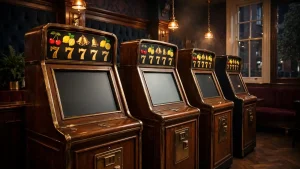
The word “random” is often misunderstood as meaning that results are unpredictable in every possible sense. It refers here to the selection of numbers by gaming equipment, not to a promise about what any individual result will be. A random process can produce repeated outcomes as well as varied ones. A short sequence, whether it looks regular or surprising, does not by itself show that the selection mechanism has changed.
This is why a past outcome cannot reliably tell you what the next one will be in a random-number game. A sequence may invite you to spot a pattern, but the pattern could be a feature of that small sample rather than a rule governing future results. Treating it as a prediction would require evidence that the game’s rules or number-selection process actually make it predictive.
The same distinction matters when people ask how to win at a Plinko casino game. Understanding that random-number selection may be involved does not reveal a method for controlling the selected number or forecasting the next outcome. The general mechanism explains how a result can be produced; it does not, on its own, explain the specific probabilities, software or operation of a named game.
For a UK Plinko casino, therefore, apply the general explanation cautiously: random-number games use numbers generated by computer or gaming equipment, but the details of a particular title must come from information specific to that title. Do not treat an animation, a short run of results or the word “random” as a complete technical description.
UK Plinko Sites: Licensing and Offshore Platforms
A Plinko game’s presence on a website does not tell you whether the operator is authorised to serve people in Britain. The relevant distinction is between casinos holding a UK Gambling Commission (UKGC) licence and platforms operating outside the UKGC system. A specialist review has described the 2026 online casino market as having these two parallel parts; that description is a source’s characterisation, not a substitute for checking an operator’s status.
The licensing rule applies to the operator, not to the name of a game. Under the Gambling (Licensing and Advertising) Act 2014, a company that takes bets from British residents must hold the required licence. Remote gambling operators selling into the British market remain subject to that requirement even if their business is based elsewhere. A site’s claim that it accepts UK customers does not, by itself, show that it is licensed here.
Some offshore casinos do accept UK players, but they operate beyond the UKGC’s regulatory system and do not hold a UKGC licence. They may be described as non-GamStop sites, but that label is not evidence of UK authorisation. In practical terms, distinguish a site’s accessibility from its regulatory status: being able to open an account or view a Plinko game does not make the operator part of the UK-licensed market.
If you are deciding whether a Plinko casino is legitimate for British customers, focus first on the operator’s licence status rather than the game’s branding, a welcome offer or a no-deposit bonus. A promotion cannot replace the licence required to take bets from residents. The same principle applies whether a site presents Plinko among its casino games or markets it as a slots-style product: the operator’s position is what determines whether it is licensed to serve the British market.

This distinction matters when comparing Plinko gambling sites available to UK visitors. UKGC-licensed operators fall within the British regulatory framework; offshore platforms do not. Treat those as different regulatory settings, rather than assuming that all sites accessible from the UK offer the same status or protections.
How to Assess a Plinko Game Without a “Best” Ranking
A “best” label is a judgement, not evidence that a game will suit you or produce better results. To assess a Plinko game, separate details you can verify from conclusions that are only implied by promotional language.
Start with the information attached to the game itself. Look for rules explaining what the displayed choices mean, how a result is determined, and what the available settings change. Check whether the stated return or other statistical information is clearly defined, including the conditions to which it applies. If a description uses terms such as “high potential” without explaining the measure or assumptions behind them, treat that phrase as advertising rather than a technical property.
Then consider what can be established about the game’s operation. Published rules and technical disclosures can describe features and conditions; they cannot show that a particular session will produce a favourable result. Nor does a polished interface, a large number of choices, or a dramatic presentation establish that the game is fairer or more rewarding. Those are impressions about presentation, not evidence of an advantage for the player.
- Review the rules for how results are determined
- Verify the defined return and statistical information
- Identify the specific settings and what they change
- Confirm the stake amount and financial terms
The distinction matters when you compare claims about possible gains. Casino games generally give the casino a predictable advantage over the long term, while still allowing players to gain in the short term. A possible win therefore does not demonstrate that a game is favourable overall. Claims about a large potential payout need to be read alongside the rules and any available information about how outcomes and returns are defined.
You may see a Plinko game described as a slot or grouped with other casino games. A label alone does not tell you how its particular version works. For a useful comparison, record what its rules actually state, what information is measurable, and what remains a claim about quality. If two descriptions cannot be compared on the same disclosed terms, a “best” ranking would suggest more certainty than the evidence supports.
What a Plinko Demo Can and Cannot Tell You
If a casino makes a Plinko demo available, treat it as a way to inspect the game’s presentation, not as evidence of what playing for money will be like. You may be able to see how the screen is arranged, what information is displayed and how the game responds to your inputs. Those observations can help you understand the interface before deciding whether to use it.
A demo can also show how the game presents outcomes during the session. That is different from establishing what outcomes to expect over time. A short sequence of results is only a record of that sequence; it does not tell you what a later session will produce or demonstrate that a particular result is due. The appearance of a result on screen is not, by itself, proof of how the game generates it.

The key distinction is whether you are risking cash or chips. Casino gambling involves staking cash or chips on possible random outcomes, whereas simply interacting with a demonstration does not make the same financial wager. A Plinko casino demo UK page may therefore let you inspect a game without showing the conditions or consequences of playing for real money. Do not assume that the demo and a real-money version behave identically in every respect.
A demo cannot establish that you will win, predict a future result or show how your own finances would be affected by wagering. Nor does seeing a game presented as a Plinko slot demo prove that the version available for real-money play has the same settings, rules or interface. Those details need to be read in the game information provided for the version you are considering.
Use a demo, where available, to understand what is visible and how to navigate it. Keep that limited purpose separate from judging the financial risk of gambling. A demonstration can make the interface easier to interpret; it cannot turn a random outcome into a forecast.
Deposits and Withdrawals: What the Payment Process Involves
A payment to a casino with Plinko UK is processed by the platform and its payment providers; the game itself does not determine how money moves. The same distinction applies when you request a withdrawal: Plinko describes the game, while the casino’s payment arrangements govern deposits and payouts.
UK Payment Systems
Open banking allows payment initiation via a bank connection, while Faster Payments is a UK service for moving money between accounts. Both can reduce transfer steps but do not guarantee immediate processing by the casino.
Open banking and Faster Payments have made transfers to and from online casinos less cumbersome. Open banking allows a payment to be initiated through a connection with your bank, while Faster Payments is a UK payment service for moving money between accounts. These systems can reduce steps in the transfer process, but they do not establish how quickly a particular casino will credit a deposit or complete a withdrawal.
The payment journey has separate stages. A deposit request must be submitted and processed before funds appear in your casino balance. A withdrawal request must be reviewed and then sent through the casino’s chosen payment route. A delay at one stage does not necessarily mean the same delay will affect the other: deposits and withdrawals are distinct transactions, even when they use related banking services.
A specialist review reports that some alternative platforms offer deposits immediately and complete withdrawals within hours rather than days. Treat that as a report about some platforms, not a promise applying to every casino or every Plinko withdrawal in the UK. Processing can depend on the platform and the payment method, so a stated timeframe should be read as a description of that operator’s process, not a general property of Plinko.
Before using a casino, read its payment information for the available methods, any stated processing conditions and how it handles withdrawal requests. If a payment is pending, check whether the casino shows it as submitted, under review or completed; those statuses describe different points in the process. This gives you a clearer way to understand what is happening than assuming that a fast deposit means an equally fast payout.
So, what is a Plinko casino in payment terms? It is a casino offering the game, with deposits and withdrawals handled through the platform’s payment system. Comparing casinos with Plinko UK therefore means checking their payment arrangements separately from the game itself.

Crypto Payments at Plinko Casinos
A Plinko game and the payment methods at a casino are separate parts of the service. A specialist review reports that some alternative platforms may accept Bitcoin, Ethereum and Litecoin, alongside conventional cards and e-wallets. That describes possible payment options at those platforms; it does not establish that every casino offering Plinko supports cryptocurrency, or that all three coins are available at the same site.
If you are looking for a Plinko casino that accepts crypto, check the platform’s own cashier and payment terms before registering. Look for the specific currency named, whether it is listed for deposits, withdrawals or both, and any conditions attached to its use. A general statement that a site accepts cryptocurrency is not enough to confirm support for a particular coin or transaction type.
Crypto is one possible payment route, not a requirement for playing Plinko. A platform may also list conventional cards or e-wallets, while another may offer a different set of options. The available methods can therefore affect which account-funding route you can use, but they do not change the Plinko game itself.
For UK players, distinguish between a payment option advertised by an alternative platform and the rules applying to a UKGC-licensed casino. UK-licensed casinos cannot accept credit cards for gambling. Do not assume that a cryptocurrency option, or a card option, tells you whether an operator is licensed to serve British customers; payment methods and licensing are separate matters.
Before choosing a method, read the platform’s terms and confirm that the named option is currently available to you. Treat a coin’s appearance in a general payment list as an indication to check, not as confirmation that it can be used for every transaction. This keeps the decision focused on the actual methods the platform makes available, rather than on the assumption that every crypto casino handles payments in the same way.
Casino Games: Slots, Crash Games and More
Content created by the «myessayhelper» team