
Understand the mechanics before you play
 Available in US

See how shared jackpot balances are funded, how progressive slots differ from non-progressive games, and which rules matter before play.
How Progressive Jackpot Pools Build
A progressive jackpot pool is a shared balance that grows as wagers are placed on a connected slot game. It is separate from the ordinary game balance: part of each qualifying wager is allocated to the jackpot, while the rest remains available to fund the game’s other outcomes and costs. The contribution is small relative to the full stake, but it accumulates across repeated plays.
Progressive jackpot slots typically direct between 1% and 3% of each wager to the pool. The exact contribution depends on the game’s design; the range is not a universal rate that applies identically to every title. If you want to understand a particular game’s funding arrangement, look for its rules or paytable, where the provider may explain how its jackpot works. The key point is that the pool is funded incrementally: each eligible wager adds a portion, rather than the entire stake being placed into the jackpot.
This distinction matters when you think about where the money in the pool comes from. A player may stake on the game repeatedly, but only the allocated share of each wager feeds the progressive amount. The remaining share is not part of that jackpot balance. Contributions from many wagers can build the pool over time, so its growth reflects activity across the connected game rather than the spending of one individual player.
When choosing a site for progressive slots in the UK, payout timing is one practical detail to check. This list gives you the stated payout speed for each operator.
-
Dieselwin
- Payout speed
- 1-3 business days
Dieselwin lists a payout speed of 1–3 business days, giving you a stated timeframe to consider.
-
SpinFormula
- Payout speed
- 1-3 business days
SpinFormula lists a payout speed of 1–3 business days, a useful detail for you to keep in mind.
-
EvoSpin
- Payout speed
- 1-3 business days
EvoSpin lists a payout speed of 1–3 business days, so you have a stated payout timeframe to refer to.
-
Amunbet
- Payout speed
- 1-3 business days
Amunbet lists a payout speed of 1–3 business days, which gives you one clear detail about payouts.
-
WinBeast
- Payout speed
- 1-3 business days
WinBeast lists a payout speed of 1–3 business days, providing you with a stated timeframe for payouts.
-
NightLuck
- Payout speed
- 1-3 business days
NightLuck lists a payout speed of 1–3 business days, a practical point for you to consider.
-
Zombillion
- Payout speed
- 1-3 business days
Zombillion lists a payout speed of 1–3 business days, giving you a stated indication of payout timing.
-
NightWin
- Payout speed
- 1-3 business days
NightWin lists a payout speed of 1–3 business days, so you can take that timeframe into account.
-
Jetsetspins
- Payout speed
- 1-3 business days
Jetsetspins lists a payout speed of 1–3 business days, offering you a specific payout-timing detail.
-
BeOnBet
- Payout speed
- 1-3 business days
BeOnBet lists a payout speed of 1–3 business days, giving you a stated timeframe to consider.
One game, multiple connected machines
A progressive jackpot can be confined to a local game installation or linked across a wider network. In a networked arrangement, connected slot machines contribute to a shared pool. Those machines may be offered through different operators, provided they carry the same progressive slot game and are connected to that network.
That connection changes the scale of the funding source. With a local pool, contributions come from play on the relevant local installation. With a network pool, contributions from connected machines at participating operators accumulate in the same jackpot balance. The pool is therefore not necessarily funded only by customers using one casino site. A player at one operator can be contributing to a balance that is also receiving contributions from players using another operator carrying the linked game.
The shared balance does not mean that every game with a similar name contributes to one jackpot. The relevant connection is the progressive game’s network arrangement, not simply the fact that two titles look alike or come from the same provider. If two versions are not connected to the same pool, their contributions do not become one balance merely because their themes or presentation are similar.
What happens to each contribution
The funding process can be understood as a sequence. A wager is placed on a connected machine; the game allocates its jackpot contribution; that amount is added to the relevant pool. Further eligible wagers add further contributions. When the game is connected across operators, the same accounting principle applies across the network: each participating machine sends its allocated share to the shared pool.

This is why a displayed progressive amount can change as play takes place elsewhere on the network. The displayed figure represents an accumulating balance, not a fixed prize attached permanently to one player or one operator. Its movement reflects the flow of contributions into the pool and the game’s rules for managing that balance. The display alone does not tell you how much any individual player has contributed, because contributions are aggregated.
A useful way to read a progressive amount is as a running total supported by eligible play. It should not be treated as money set aside solely from your own wagers, nor as a promise that the whole stake goes towards the prize. The pool’s growth is collective wherever the game is networked. This explains how a jackpot offered through a single casino interface may still be funded by activity across other connected operators.
Local pools and network pools
The word “progressive” describes the increasing pool, but it does not by itself tell you how wide the contributing network is. A game can build a pool from a more limited set of connected machines, or it can use a network shared across operators carrying that same game. The funding scope depends on the connection established for the title.
For someone playing online slots with a progressive jackpot in the UK, this means that the casino site is only one part of the picture. The operator provides access to the game, while the game’s progressive arrangement determines which connected machines contribute to the pool. Two sites may each offer the same networked game and show the same shared jackpot, because both are linked to that pool. Conversely, the presence of progressive games on two sites does not establish that their pools are connected.
The contribution rate and the network boundary answer different questions. The rate describes what share of a wager is directed to the jackpot. The network boundary describes which machines’ contributions are combined. Together, they explain how a progressive balance can grow: a defined portion of eligible wagers enters a pool, and the pool may gather those portions from connected machines across multiple operators. That is the funding mechanism behind a shared progressive jackpot—not a separate deposit made by the player, and not the full value of each wager.
Playing Progressive Slots for Free
Free play can help you understand a progressive slot’s layout and controls, but it does not necessarily reproduce the conditions for a real-money jackpot. A demo may show a jackpot meter and let you spin without risking cash; that alone does not confirm that demo spins contribute to a shared prize or qualify for a cash award. Treat the mode as a way to inspect the game, not as evidence that a displayed win could be withdrawn.

Promotional free spins are different from demo play. They are issued under an operator’s bonus terms, and those terms determine which games you can use them on, whether winnings are withdrawable, and what limits apply. Progressive slots may be excluded altogether. Specialist bonus reviews report that most free-spin offers are restricted to non-progressive games; if a progressive title is included, check the promotion’s eligible-game list rather than assuming the spins work across the catalogue.
Those reviews also report free-spin winnings caps in the £50–£100 range for progressive slots. This is a reported range, not a universal rule. The binding figure, if any, is the cap in the offer terms. A cap can limit the amount you retain even if the game displays a larger win, so check how the operator defines winnings and whether the restriction applies before you activate the offer.
A no-deposit bonus is another form of promotional play, but it does not mean that any resulting balance is immediately available to withdraw. Specialist bonus reviews report wagering requirements in the 40x–60x range and maximum withdrawal caps of £50–£100 for no-deposit offers. These are reported terms, not standard conditions across all operators. Read the specific offer to see what amount the wagering multiple applies to, which games count, and whether a withdrawal cap is imposed. If the bonus terms do not clearly explain these points, do not infer them from the advertised bonus amount.
Do
- Check the offer's eligible-game list
- Verify the specific withdrawal cap in terms
- Read the wagering multiple's base amount
Don't
- Assume spins work across the whole catalogue
- Infer caps from the advertised bonus amount
- Ignore game restrictions in bonus terms
Wagering requirements matter because they set how much qualifying play is required before bonus winnings can be withdrawn. The stated multiple alone may not tell you the full calculation: the terms define the amount used as its base and which bets contribute. A game restriction can also make a bonus unsuitable for progressive play, even where the game itself appears in the operator’s catalogue. Check eligibility and the full withdrawal conditions before starting.
Free progressive slots online can therefore answer practical questions about presentation: where the meter appears, how the game responds to a spin, and how its bonus features are displayed. Free play cannot establish that a real-money jackpot is available, that a promotional spin qualifies for it, or that a displayed amount would be payable to you. Those points depend on the game mode and the promotion’s terms, not merely on the title being labelled progressive.
If you are using a no-download version, distinguish the way you access the game from the terms governing play. Playing in a browser rather than installing software does not change whether a spin is a demo, a free-spin promotion, or a real-money wager. Check the mode shown on screen and the relevant bonus rules before treating any result as cash winnings.
How to Find and Play Progressive Slots
Progressive slots for UK players are not always grouped under a single heading. An operator’s lobby may place them in a jackpot category, among new releases, or within a provider’s own collection. If you cannot see a dedicated progressive-jackpot filter, use the catalogue search and enter a game title or provider name. You can also browse the provider list and inspect the titles shown there.

A game’s presence on one site does not establish that it is available everywhere. Availability can differ between operators and change when providers update their catalogues; this variation is noted in a specialist review. A title may therefore appear in one operator’s lobby but not another’s, or disappear from a catalogue later. Check the live catalogue of the site where you intend to play rather than relying on an old list or a result from another casino.
A practical way to locate a game
Start with the operator’s game lobby. Look for a jackpot or progressive category, but treat category labels as a browsing aid rather than a complete inventory. If the site has a search box, try the exact title first. A search for a provider can help when you do not have a particular game in mind, although it may return non-progressive games as well.
When a result looks relevant, open its game information or rules before starting. Confirm that it is identified as a progressive jackpot slot and check how the operator describes access to the game. The title and presentation can look similar across sites, but the catalogue entry on the operator you are using is the practical reference for whether that game is available there.
Locate a Game
-
1
Search the lobby
Look for a jackpot or progressive category or use the search box for a specific title or provider.
-
2
Verify the game
Open the game information or rules to confirm it is identified as a progressive jackpot slot.
-
3
Confirm availability
Check the live catalogue of the operator to ensure the game is currently offered.
If a title is missing, try searching by provider or checking the wider catalogue rather than assuming it has been removed everywhere. If it still does not appear, contact the operator’s support team to ask whether the game is currently offered. A previous bookmark or search result may point to a page that has since changed, so verify that the game opens from the operator’s current lobby.
Before you start playing
Use a UKGC-licensed operator and verify its licence on the Gambling Commission’s public register before depositing. Once you have located a title, open it from the operator’s own site or app and read its displayed rules. This lets you confirm that you have selected the intended game and see any game-specific information before a stake is placed.
In Britain, operators must check your age before allowing a deposit. Online slots also have a maximum stake per game cycle: £2 if you are aged 18 to 24, and £5 if you are 25 or older. Autoplay is not permitted, and at least 2.5 seconds must pass from the start of one game cycle before the next can begin. These restrictions apply when you play online, regardless of how you found the title.
Free-play access is a separate matter from finding a game in a catalogue. A title appearing in a lobby does not, by itself, mean that it is available through free spins or another bonus; check the offer’s terms and the game’s own availability details. If your aim is to try a particular progressive slot, confirm both the title and the permitted play mode with the operator before proceeding.
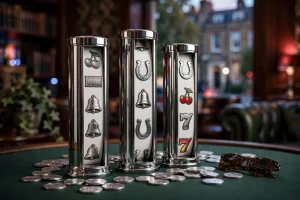
There is no dependable way to identify the “best” or most popular progressive slot for every player from a catalogue position alone. Listings and featured sections show how an operator presents its games, not a universal ranking. Choose a title by confirming that it is the game you intended to open, that it is currently available on the site, and that its rules and play mode are clear to you.
What to Compare in a Progressive Slot Game
A useful comparison starts with the game’s rules, not the size of the jackpot shown on its screen. A prominent prize figure tells you what is displayed at that moment; it does not, by itself, describe the game’s jackpot structure or the experience of playing its base game. Check the information supplied for the specific title before comparing it with another.
Read the jackpot rules separately from the base game
Look for a clear explanation of how the jackpot is organised. A game may present a single prize or describe more than one jackpot level, but the labels alone are not enough to tell you how those prizes relate to one another. The rules should explain which prize a feature refers to and what conditions apply. If that information is unclear, you cannot make a reliable comparison from the jackpot display alone.
Also distinguish the jackpot mechanic from the ordinary spin. Some progressive jackpots are awarded at random; others depend on a particular combination or entry into a bonus round. That distinction affects how the prize is connected to play, but it does not establish which game is more likely to pay out. Treat the mechanic as one comparison point, not as a prediction.
The jackpot and the base game are related, but they are not the same feature. Progressive slots often have a base-game RTP in the 88%–92% range, with part of the payout allocation directed towards the jackpot pool. That range is a broad characteristic, not a promise about an individual session or a measure of the chance of winning the jackpot. When comparing two titles, check whether the stated RTP applies to the base game and whether the game information describes the progressive prize separately.
Compare what happens between jackpot events
The base game determines what you see and do on spins that do not award the progressive prize. Compare its rules and layout using the game’s own information: what combinations pay, whether special features are explained, and how those features connect to the jackpot rules. A detailed description makes it easier to understand what a spin can produce without treating every feature as part of the jackpot.
Do not use visual complexity as a substitute for clear rules. A game may have several symbols, bonus features or prize labels, yet those details only help you compare it if their effects are explained. Check that the paytable and game rules distinguish ordinary payouts from jackpot outcomes. If a title uses a term such as “mystery”, the label alone does not tell you how the prize is awarded; the rules need to define it.

Make comparisons on like-for-like information
For each title, note the jackpot structure, the stated base-game RTP and the way the game describes its non-jackpot features. Compare like with like: a base-game RTP should not be treated as though it includes the full value of a progressive prize, and a displayed jackpot amount should not be treated as a measure of the base game’s returns.
A “best” progressive slot is therefore not an objective category that can be established from one number. A larger displayed prize does not tell you whether the base game suits your preferences, while an RTP figure does not explain the jackpot conditions. On mobile, use the game’s information panel just as you would on a larger screen; the rules, rather than the device, are what you need to assess. Where the details are not presented clearly, avoid filling the gaps with assumptions. Compare only what the game actually explains.
How a Progressive Jackpot Is Triggered
A progressive jackpot can be funded continuously without being awarded on every spin. The trigger is the event that decides when a qualifying play wins the prize. Across games, that event may be random, tied to a specific symbol combination, or reached through a bonus round. The game’s rules determine which route applies; the word “progressive” describes the jackpot structure, not a single way of winning it.
How are jackpots triggered?
Jackpot triggers vary by game: they can be random (occurring without a specific combination), tied to a specific symbol combination, or reached through a bonus round.
Random triggers
In a random-trigger game, the jackpot can be awarded without the spin displaying a particular winning combination. The game selects a qualifying event through its own mechanism, so an ordinary-looking result does not necessarily show whether the jackpot feature was in play. A particular combination of symbols may still matter for the base game, but it is not necessarily the condition for the progressive prize.
This does not mean that you can infer when the jackpot will appear from the recent history of spins or from the prize pool’s displayed amount. The trigger is defined by the game, not by a visible pattern that a player can use to time a win. “How often do progressive slots hit?” has no single answer: random-trigger games and combination-based games have different rules, and the trigger description alone does not state how likely a win is.
Some random-trigger games may also distinguish between jackpot tiers by stake. A specialist review has reported games in which a minimum bet is needed to qualify for the highest tier. Treat that as a rule to verify for the specific game, rather than as a feature shared by all progressive slots. If a qualifying stake applies, a lower stake may leave you eligible for a different prize or ineligible for that top tier, depending on the game’s stated rules.
Combinations and bonus rounds
Other games require a defined event on the reels or in a feature. That could mean landing a particular combination, or entering a bonus round in which the jackpot can be won. In those games, reaching the feature and winning the progressive prize are not necessarily the same thing: the rules may specify a further condition within the bonus round.

Read the game’s help or paytable for the exact sequence. Check whether the jackpot requires symbols to land in particular positions, whether a bonus feature must be entered, and whether an additional condition applies once it begins. The trigger can be easy to misread if the game describes the bonus entry prominently but places the jackpot condition in a separate rules panel.
What “must-hit-by” means
The phrase “must-hit-by” is associated with a stated threshold for a jackpot trigger. It should not be taken to mean that you can predict the winning spin or that every progressive jackpot uses this mechanism. Check the individual game’s rules to see what the threshold refers to and what event awards the prize. A label alone does not explain the trigger or establish that a jackpot is due on a particular play.
So, how do online progressive slots work at the point of a win? The jackpot is awarded when the game’s specified trigger occurs and any stated eligibility conditions are met. Those conditions vary by title. The reliable way to understand the route to a prize is to separate the trigger itself from the stake or feature requirements, then follow the rules for that game.
RTP and the Odds Behind Progressive Slots
RTP, or return to player, describes the proportion of stakes a slot is designed to return as winnings over extended play. It is a theoretical measure across many plays, not a promise about what you will receive in a particular session. Nor does it tell you how likely you are to hit a progressive jackpot.
In progressive slots, some of the wager can be allocated to the jackpot pool rather than returned through the base game. A typical contribution is between 1% and 3% of each wager. The base-game RTP can consequently be lower than it would be if more of the stake funded ordinary game payouts. For progressive slots, base-game RTP often falls in the 88%–92% range, with the difference in payout directed to the jackpot pool.
These figures describe different parts of the game’s payout structure. The contribution rate concerns funding for the progressive prize; base-game RTP concerns the theoretical return from play outside that prize. They should not be added together as if they were interchangeable measures, or treated as a calculation of the jackpot’s chance of being won. The published base-game figure alone does not show the full return from the jackpot feature.
The odds of winning a progressive prize depend on how that particular game awards it. A game’s RTP does not reveal how often its jackpot trigger occurs, how many qualifying outcomes there are, or how the jackpot is divided into tiers. Those details require information about the game’s rules and jackpot design. A higher base-game RTP, by itself, therefore does not establish better odds of winning the progressive prize.
When you compare progressive slots RTP figures, check what the stated percentage covers. A figure for the base game is not necessarily a total that includes the progressive jackpot. If the operator or game information does not make the scope clear, the percentage cannot answer whether jackpot returns have been included. Avoid comparing figures as though they describe the same thing unless their definitions match.

This distinction also applies when looking for top progressive slots in the UK, or progressive slots with crypto. A ranking, payment option or game title does not supply the missing probability information. To understand the odds, you need the rules governing the jackpot, not just the RTP label. The RTP can help describe the game’s theoretical payout structure; it cannot predict when a progressive prize will be won or guarantee a result.
Playing for Real Money and Receiving a Jackpot
A real-money progressive jackpot win does not necessarily arrive in your bank account as soon as it appears on screen. The operator may need to confirm the result and complete additional verification before arranging payment. A specialist review reports that a large jackpot can involve extra checks and may be paid in structured instalments over several years. Treat that as a possible arrangement, not a schedule that applies to every game or operator: the relevant payment terms depend on the operator and the game.
Before you play, read the game and account terms for how a large win is handled. Check whether the jackpot is paid as one amount or in instalments, what verification may be requested, and how the operator communicates the payment schedule. If the terms are unclear, ask the operator before staking money. A displayed jackpot amount does not, by itself, tell you when funds will be available or how they will be delivered.
- Read account terms for large win handling
- Check if payment is one lump sum or instalments
- Verify required documentation for verification
- Confirm processing times for your payment method
The time taken to receive a withdrawal also depends on the payment method. A specialist review gives indicative timings of one to three working days for debit-card withdrawals, hours for e-wallets, and three to five working days or longer for bank transfers. These are reported estimates, not a guaranteed service standard. Processing can also involve separate stages: the operator may review and approve a withdrawal before the payment provider handles the transfer. A delay at either stage can affect when the money reaches you.
For a substantial win, keep records of the game, the result and any messages from the operator. Respond promptly if the operator requests information, and use its stated process to ask about verification or payment progress. Do not assume that choosing a faster payment method removes checks related to the win.
If you are considering real-money progressive slots in the UK, use a UKGC-licensed operator and read its withdrawal terms before depositing. The game’s jackpot display, the operator’s approval process and your payment provider’s processing time are separate parts of the payout path. Understanding those stages makes it easier to distinguish a confirmed win from money that has actually arrived in your account.
Progressive Slots in the UK: What to Check Before You Play
Before playing progressive slots, check that the casino holds a current operating licence from the UK Gambling Commission. The licence is the key regulatory check: online gambling is legal in Great Britain only through operators with the relevant UKGC licence, and remote gambling businesses must hold it when offering gambling to consumers there, wherever their key equipment is located.

The Commission regulates commercial gambling in Great Britain and is the sole regulator for that activity. Its remit includes online casinos and remote gambling offered to consumers in Great Britain. The location of a casino’s servers or other key equipment does not remove the requirement for a licence when it serves that market.
The Gambling Commission issues operating licences to businesses and personal licences to individuals working in relevant roles. These are different permissions: the operating licence covers the business offering gambling, while a personal licence applies to an individual. A casino’s regulatory status therefore depends on the business holding the appropriate operating licence, not merely on staff or individuals being licensed.
Use the Commission’s public register to check the operator’s licence number before depositing. Match the licence record to the business named on the casino site; a licence held by a different company is not a substitute for the operator’s own authorisation. If the operator’s identity or licence status is unclear, do not treat the presence of progressive jackpot slots as evidence that the site is authorised.
The UK and Great Britain are not interchangeable in every legal context. The Gambling Commission’s stated role as sole regulator for commercial gambling applies to Great Britain. For a player choosing an online casino serving the British market, the practical check is whether the business offering the gambling holds a current UKGC operating licence. This regulatory check concerns the operator and its permission to provide gambling, rather than the jackpot format of an individual slot.
A regulated status also gives you a clear authority to consult if you need to confirm an operator’s licensing position. Check the register directly rather than relying only on a logo or a claim displayed on a casino’s own pages.
What “Progressive Penny Slots” Means
“Progressive” describes how a slot’s jackpot is structured: its value can grow as play contributes to a shared prize pool. “Penny” is a separate label about stake size, not a feature of the jackpot. Put together, “progressive penny slots” means progressive jackpot slots that someone expects to play at a low stake.
That wording does not confirm that a particular game accepts a one-penny stake, or that every stake option qualifies for its jackpot. The available stake settings and any conditions attached to them depend on the game. Check the game’s information panel and the operator’s terms before treating “penny” as a description of the amount you can wager.
The contribution to a progressive pool is also distinct from the amount of your stake. Progressive jackpot slots typically direct between 1% and 3% of each wager to the pool. The rest of the game’s payout structure is not described by the word “penny”, and a low stake does not by itself establish how the jackpot works.
For progressive slots online in the UK, read the displayed stake as the amount placed on an individual game cycle, not as a promise that the title is available at that level. Online slot stake limits apply in Britain: the maximum per game cycle is £5 for customers aged 25 and over, and £2 for those aged 18 to 24. These are ceilings, not minimum stakes or confirmation that a particular slot offers a penny-level setting.

When you assess a title, separate three things: whether its jackpot is progressive, what stake options the game actually offers, and what conditions apply to jackpot eligibility. The label combines two ideas, but only the game’s own rules establish how they fit together.
Progressive vs Non-Progressive Slots
The defining difference is whether wagers feed a jackpot that can grow across play. In a progressive slot, contributions from wagers on connected machines accumulate in a shared jackpot pool. A non-progressive slot does not build that kind of pool: its prizes come from the game’s own paytable rather than a wager-funded jackpot that increases over time.
That distinction changes what the headline prize represents. A progressive jackpot can rise as connected play adds contributions, so its displayed value may change. In a non-progressive game, the top prize is set by the game’s rules and does not grow through contributions from other machines. The game may still offer substantial prizes, but they are not a shared progressive pool.
The label does not describe every part of the experience. Both types can have a base game with symbols, paylines or other features, and a progressive title can include ordinary wins that are separate from its jackpot. To compare the two, identify which prizes belong to the game’s paytable and whether a displayed jackpot is linked to a pool receiving wager contributions. A large prize graphic alone does not establish that a game is progressive.
For a UK player, the practical choice is between a game whose jackpot can build through connected play and one whose prizes remain within its own payout structure. Progressive casino slots in the UK therefore differ from non-progressive titles in the source and behaviour of the jackpot, not simply in how dramatic the screen looks. When reviewing online casino progressive slots, check the game’s own rules to see whether it describes a progressive pool; the game type is defined by that mechanism, not by the word “jackpot” alone.
Do all UK casinos offer the same progressive jackpot games?
No. Progressive slot availability varies by operator and can change as providers update their game catalogues.
What should I look for in a progressive jackpot slot?
Check how the jackpot is triggered and whether a minimum bet is needed to qualify for the top tier. The game rules or paytable can also explain how its jackpot is funded.
Can you win a progressive jackpot on a minimum bet?
Some games require a minimum bet to qualify for the highest jackpot tier, so check the game’s rules before playing.
How fast are progressive jackpot withdrawals paid out?
Debit card withdrawals typically take 1–3 working days, e-wallets can take hours, and bank transfers often take 3–5 working days or longer. Large jackpot payouts may need extra verification and can be paid in instalments over several years.
How do I check if an online casino is licensed in the UK?
Check whether the operator holds an operating licence from the UK Gambling Commission, which regulates remote gambling offered to consumers in Great Britain.
How can you tell whether an online casino is licensed and legal in the UK?
Check that the casino operator holds a UK Gambling Commission operating licence. The Commission regulates remote gambling offered to consumers in Great Britain.
Casino Games: Slots, Crash Games and More
Content created by the «myessayhelper» team